中文简体
中文简体



How an Injection Molding Machine Works at a Glance
An injection molding machine works by feeding plastic granules into a heated barrel, melting them into a viscous liquid, injecting the melt under high pressure into a closed mold, cooling it until the part solidifies, and then ejecting the finished piece.
This cycle repeats automatically. For automotive trim, medical components, electronics housings, and household goods, injection molding remains the most efficient way to produce high volumes of identical plastic parts.
What Is an Injection Molding Machine?
An injection molding machine is a production device that melts plastic, injects it into a mold cavity under pressure, and allows it to cool into a solid part.
It is built for repeatability: every shot must fill the mold the same way, cool uniformly, and eject cleanly. Typical cycle times range from roughly 10 seconds for small thin-wall parts to more than a minute for large or thick-wall parts. Machines are classified mainly by injection unit size and clamping force, and both must be matched to the mold and material.
Three Main Systems: Injection Unit, Clamping Unit, and Mold
Every injection molding machine combines three main systems: the injection unit, the clamping unit, and the mold. The injection unit melts and pushes the plastic, the clamping unit holds the mold shut, and the mold forms the part.
Injection Unit
The injection unit receives granules from a hopper, melts them in a heated barrel, and uses a rotating screw or plunger to move the material forward. During injection, the screw acts as a piston and pushes a controlled volume of melt through the nozzle into the mold. The unit also regulates barrel temperature, injection pressure, and shot size.
Clamping Unit
The clamping unit closes the mold, holds it tightly shut during injection, and opens it for ejection. Its main job is to generate enough clamping force to resist the pressure of the melt pushing against the mold cavity. Clamping force is expressed in tonnes or kilonewtons, and insufficient force causes flash along the parting line.
Mold and Tooling
The mold is a precision cavity, normally machined from hardened tool steel or aluminum, that defines the part geometry. It also contains runners, gates, cooling channels, and ejector pins. Mold design controls material flow, cooling rate, and how easily the finished part is released.
The Injection Molding Cycle Step by Step
A complete molding cycle follows the same order: close the mold, inject plastic, hold pressure, cool the part, open the mold, and eject. The stages below show exactly what happens in one full cycle.
| Stage | What Happens | Why It Matters |
|---|---|---|
| Mold closing | The moving platen brings the two mold halves together; the clamp builds to full force. | The mold must be completely sealed before injection, otherwise plastic leaks out as flash. |
| Injection / filling | The screw moves forward, pushing melt through the nozzle, runner, and gate into the cavity. | Filling determines the part shape, surface quality, and whether every detail is reproduced. |
| Packing / holding | Pressure is maintained briefly to add extra melt into the cavity. | Packing compensates for plastic shrinkage and prevents sink marks, voids, and dimensional drift. |
| Cooling / plasticizing | The plastic in the mold hardens while the screw rotates and retracts to prepare the next shot. | Cooling consumes the largest part of the cycle and directly affects cycle time and warpage. |
| Mold opening and ejection | The clamp opens and ejector pins push the molded part out. | Clean ejection is needed so the mold can close immediately for the next cycle. |
Even though injection filling can take less than one second, cooling time is usually the largest portion of the total cycle. This is why wall thickness and mold cooling design have such a strong effect on production cost.
Key Process Conditions That Affect Part Quality
Part quality depends mainly on four controllable conditions: melt temperature, injection pressure, injection speed, and cooling time. Clamping force and mold temperature are equally important but are often set once the tool is built.
| Parameter | Typical Range / Setting | Effect on Part Quality |
|---|---|---|
| Melt temperature | Depends on the resin; polypropylene often runs at 200 to 250°C, nylon at higher temperatures. | Too low causes short shots and flow marks; too high causes material degradation and weaker parts. |
| Injection pressure | Often 500 to 1,500 bar for commodity plastics. | Pressure must completely fill thin walls without overpacking the gate area. |
| Clamping force | Roughly 3 to 5 tonnes per square inch of projected part area as a starting point. | Insufficient clamp force allows the mold to open, producing flash and oversize parts. |
| Injection speed | Set according to material and gate design. | Fast fill prevents premature freezing; too fast can cause burning, jetting, or excessive stress. |
| Cooling time | Often the longest part of the cycle; depends on wall thickness. | Uniform cooling reduces shrinkage and warpage; cooling too long raises cost. |
For many standard applications, injection molded parts can be held to within about 0.1 mm. Precision parts can be held even tighter, but only if the machine, mold, and process conditions are all stable.
Types of Injection Molding Machines: Hydraulic, Electric, and Configuration
There are two practical ways to classify injection molding machines: by drive system and by mold orientation. The choice affects precision, energy use, automation, and floor space.
Hydraulic, Electric, and Hybrid Drives
Hydraulic machines use oil pressure to move the screw and clamp, offering high tonnage and lower initial cost. Electric machines use servo motors for each motion, giving better repeatability, shorter dry cycles, and lower energy consumption. Hybrid machines combine both approaches to balance cost and performance.
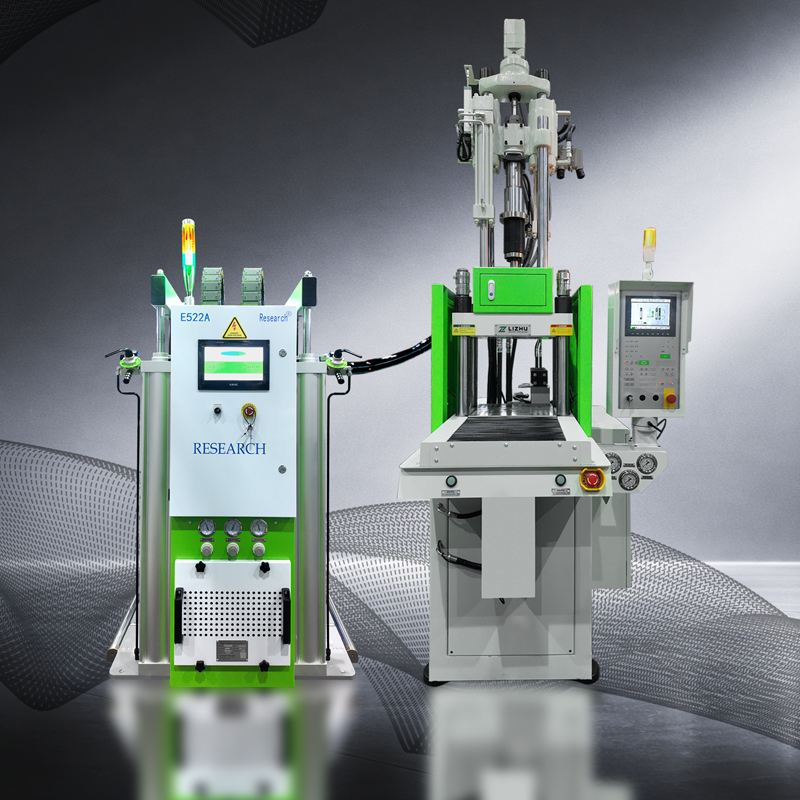
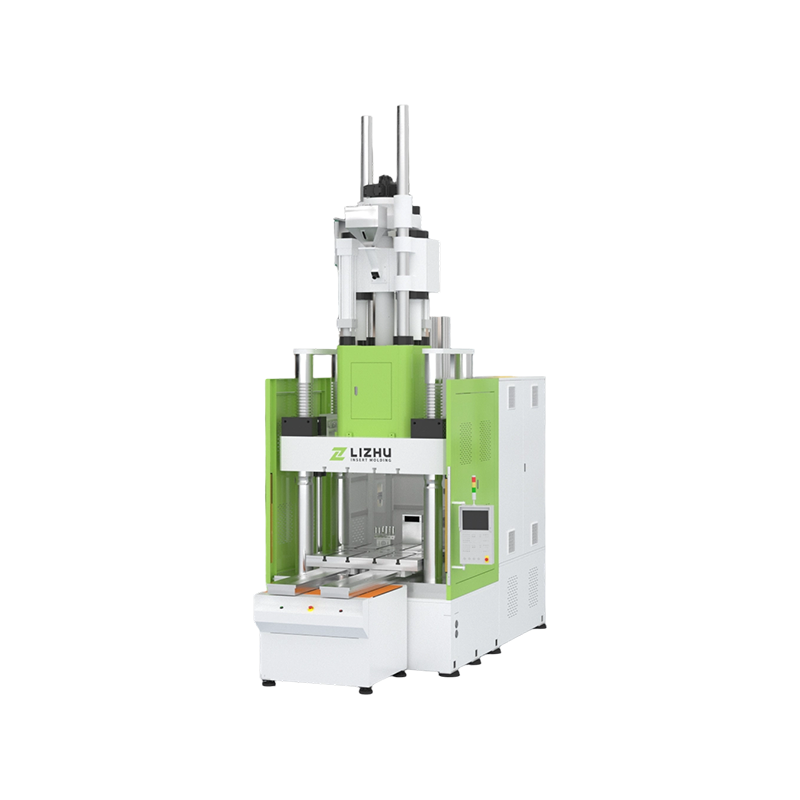
For clean-room medical and 3C electronics production, an electric vertical injection molding machine is a practical option because it combines the ergonomic advantages of a vertical layout with the repeatability and energy efficiency of servo drives.
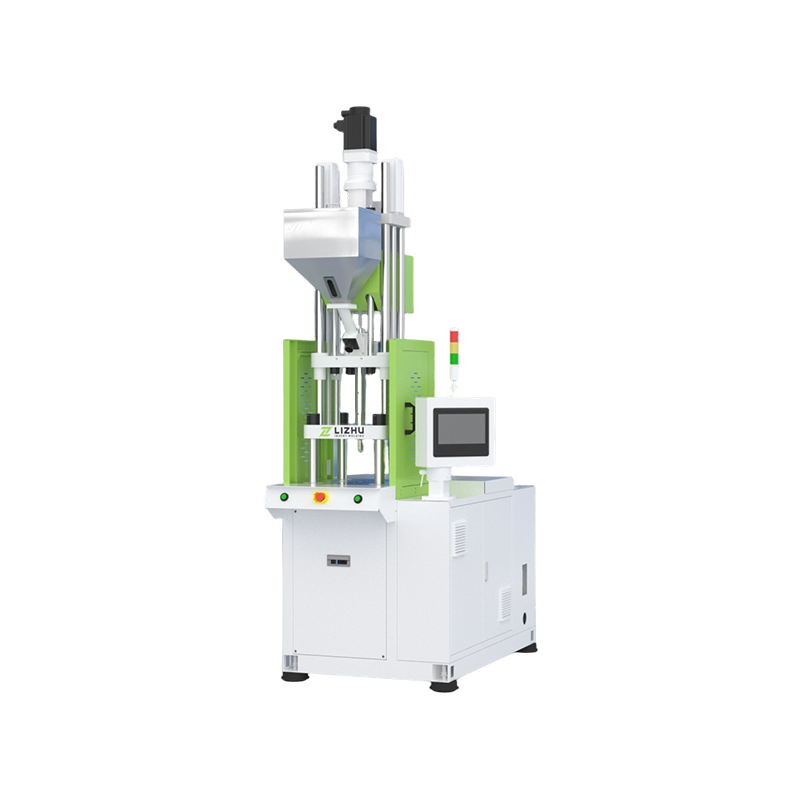 Electric vertical injection molding machine Supplier, CompanyLIZHU Machinery is China wholesale Electric vertical injection molding machine manufacturers supplier and company, offering wholesale sol...View Product →
Horizontal and Vertical Machine Configurations
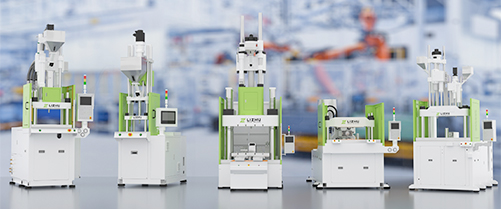
In a horizontal machine, the mold opens horizontally and most conventional injection molded parts are made on this style. In a vertical machine, the mold closes along the vertical axis. Vertical machines are often chosen for insert molding because an operator or robot can place metal or plastic inserts from above, and the part is molded around them without the insert falling out.
Vertical layouts also take up less floor space per clamp tonnage and are easier to feed with chutes or robots. For many insert molding and overmolding workflows, a standard vertical injection molding machine is the most direct way to get started.
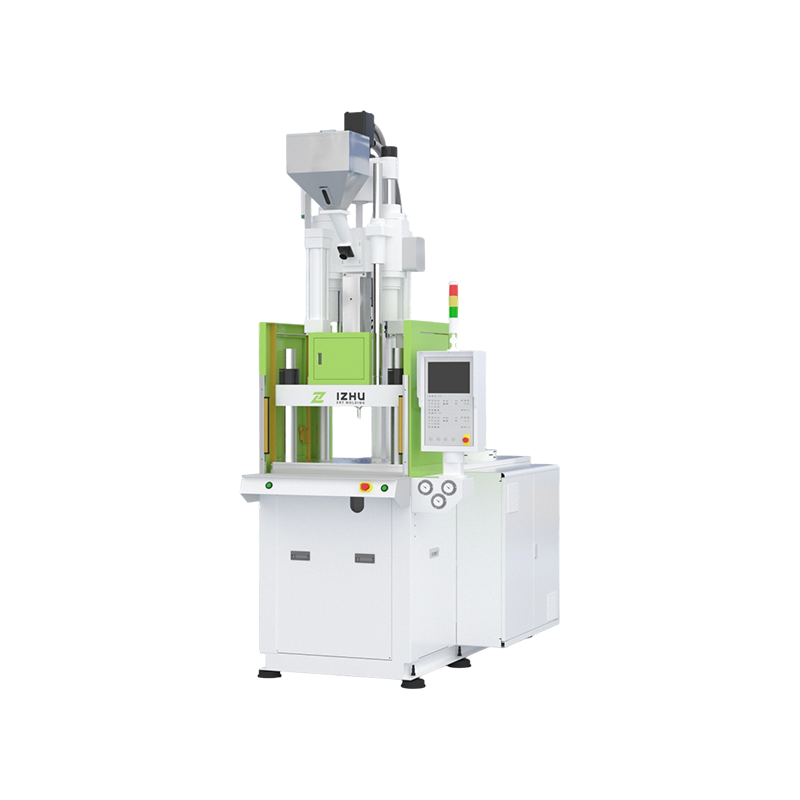 Standard vertical injection molding machine Supplier, CompanyLIZHU Machinery is China wholesale Standard vertical injection molding machine manufacturers supplier and company, offering wholesale sol...View Product →
Choosing the Right Machine: Beyond Tonnage
Selecting the right injection molding machine is not just about clamp tonnage. You also need shot size, plasticating capacity, tie-bar spacing, mold height, automation interfaces, and material compatibility. Start with the part geometry, weight, material, and batch size. Then review these machine details before purchase:
- Shot size and plasticating capacity
- Clamping force and platen dimensions
- Tie-bar spacing and mold height
- Automation interfaces for insert loading or part handling
- Total cost per part, including energy and maintenance
Underestimating any of these parameters is a common procurement risk. For example, choosing a machine with too little clamping force leads to flash, while an oversized machine raises energy consumption and operating cost.
For insert-heavy production, a rotary-table vertical injection molding machine allows the operator to load inserts at one station while the machine continues molding at another. This reduces idle time and is a proven method for improving output.
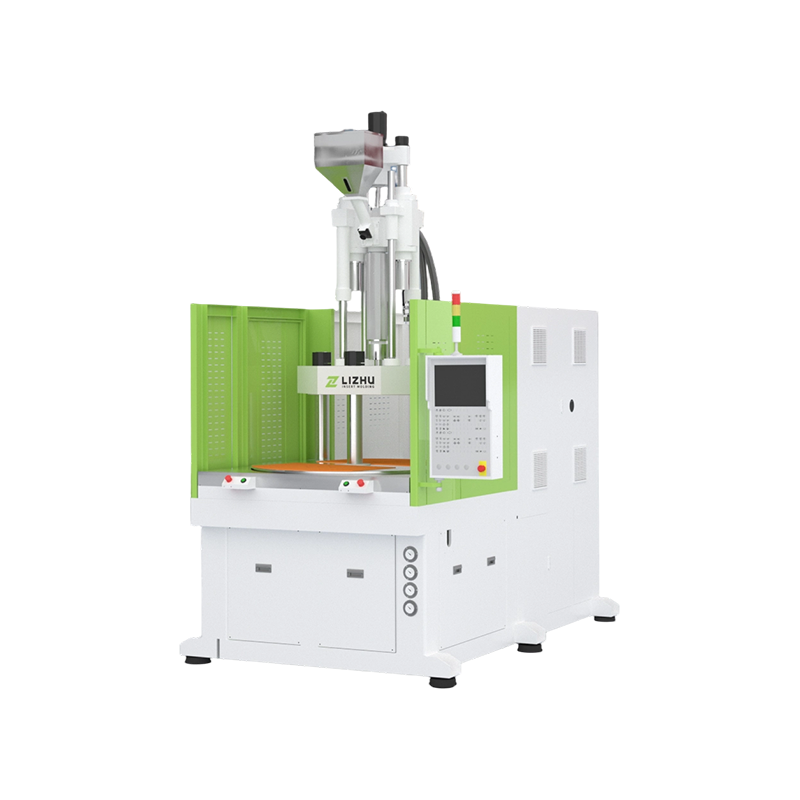 Rotary Table vertical injection molding machine Supplier, CompanyLIZHU Machinery is China wholesale Rotary Table vertical injection molding machine manufacturers supplier and company, offering wholesale...View Product →
Before making a final decision, compare the tolerances your product requires with the stability of the machine. Precision injection molding machines rely on rigid platens, consistent temperature control, and accurate clamping. If your application demands tighter dimensions than a standard machine can maintain, the design should be reviewed with an experienced vertical injection molding manufacturer.
Frequently Asked Questions
Here are short answers to the common questions about injection molding machines. For more detail, see the injection molding FAQ.
How long does an injection molding cycle take?
Cycle times depend on wall thickness and material. Thin-wall parts can cycle in 10 to 20 seconds; large or thick-wall parts may take more than a minute. Cooling typically accounts for the largest share.
What materials can an injection molding machine process?
Thermoplastics such as PP, ABS, nylon, polycarbonate, and TPE are common. Rubber and liquid silicone rubber (LSR) can also be processed on specialized machines with appropriate screw and barrel designs.
What is clamping force and why does it matter?
Clamping force is the force that holds the mold closed during injection. If it is too low, the mold can open slightly under pressure and produce flash, oversize parts, or short shots. If it is far too high, the machine consumes extra energy and can damage the mold.
Can an injection molding machine produce parts with metal inserts?
Yes. Insert molding is widely used in automotive, electronics, and medical products. Vertical machines with sliding or rotary tables are especially practical because inserts can be placed from above and molded automatically.
Final Advice
An injection molding machine works because it combines heat, pressure, and a closed mold to turn polymer granules into repeatable parts. The technical details are easier to manage when you first define the part, material, mold, and expected cycle time.
Take time to compare machine configurations, verify clamping force and shot capacity, and test the process with an experienced supplier. The most economical machine is not the cheapest one on paper; it is the one that holds tolerances, maintains uptime, and fits your automation plan.