 中文简体
中文简体
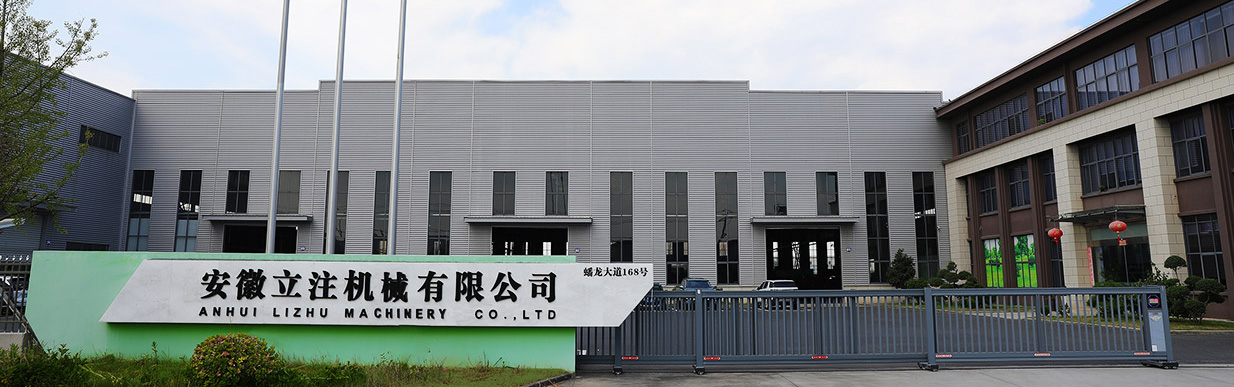
LIZHU Machinery Co., Ltd. was founded in 2011, is a leading company in high-speed precision injection molding...
View More
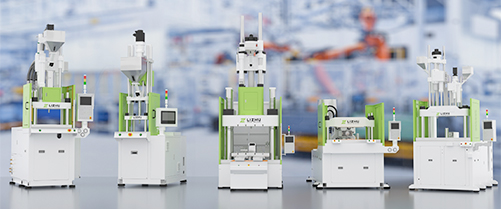
At present, we have various models of standard machines, skateboard machines, disc machines, and multi-color machines under 2000 tons.
View More
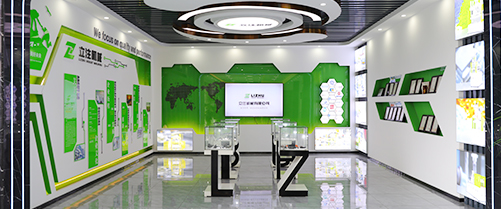
Check out the latest from the injection molding machine about the topics relevant to your industry and manufacturing process.
View More

Industry News
Home / News / Industry News / Why Is a Vertical Injection Molding Machine Preferred for Insert Molding?
 Home / News / Industry News / Why Is a Vertical Injection Molding Machine Preferred for Insert Molding?
 Why Is a Vertical Injection Molding Machine Preferred for Insert Molding?
2026-04-23
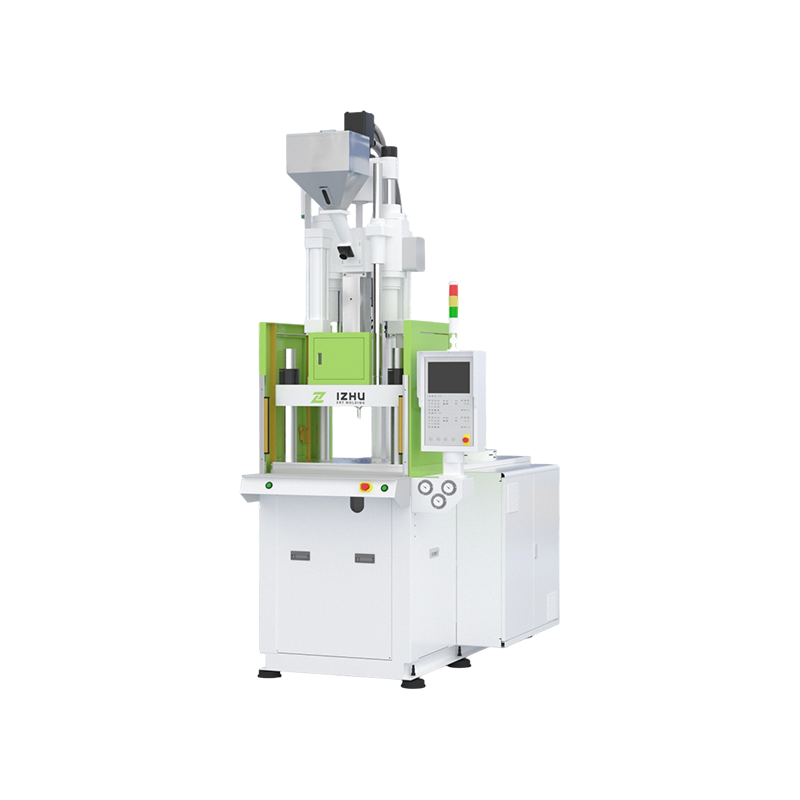
A vertical injection molding machine is preferred for insert molding because its vertical clamping axis uses gravity to hold inserts securely in place during the molding cycle, eliminating displacement risks, reducing labor costs, and enabling seamless automation. Unlike horizontal machines, vertical presses open upward and downward, giving operators unobstructed access to the mold cavity for fast, precise insert placement — a critical advantage when embedding metal pins, threaded inserts, bushings, or electronic components into plastic parts.
What Is Insert Molding and Why Does Machine Orientation Matter?
Insert molding is a process in which pre-formed components — typically metal — are placed inside an injection mold and then encapsulated with molten plastic to create a single integrated part. The finished product combines the structural strength of metal with the design flexibility and weight savings of plastic, making it widely used in automotive connectors, medical devices, consumer electronics, and industrial fasteners.
Machine orientation — whether the clamping unit opens horizontally or vertically — has a profound impact on insert stability, cycle time, operator ergonomics, and automation compatibility. In a horizontal injection molding machine, the mold opens left to right. Inserts placed in a horizontally oriented cavity must be held in place by spring-loaded pins, magnets, or other retaining mechanisms to resist lateral gravity. Any vibration or imprecise placement can cause the insert to shift before the mold closes, resulting in defective parts or, worse, mold damage.
In a vertical injection molding machine, the mold opens upward, and the cavity faces skyward. Gravity becomes an ally: inserts simply rest in position under their own weight, requiring no additional retention hardware. This fundamental difference makes vertical machines the natural choice for insert molding across industries worldwide.
Key Reasons Why Vertical Injection Molding Machines Excel at Insert Molding
1. Gravity-Assisted Insert Stability
The most decisive advantage of a vertical injection molding machine for insert molding is that gravity naturally holds inserts in the correct position throughout the entire molding cycle. When the lower mold platen faces upward, metal pins, terminals, bushings, or threaded inserts are simply set into their locating features and held securely by gravity — no springs, no magnets, no clamping fixtures needed for the insert itself.
This dramatically reduces the risk of insert displacement before or during injection. Even fine wire terminals or delicate electronic leads with very little mass stay properly positioned. Studies of production defect rates in insert molding operations consistently show that switching from horizontal to vertical machine configurations can reduce insert-related defects by 30% to 60%, depending on insert geometry and part complexity.
2. Easy and Ergonomic Insert Loading
Vertical machines offer operators direct top-down access to the open mold cavity, making insert loading faster, safer, and more ergonomically comfortable. The operator stands in front of the machine and places inserts straight down into the cavity from above — a natural, low-fatigue motion that can be sustained across long production shifts without the repetitive strain associated with reaching into a horizontally oriented mold.
In high-volume production, this ergonomic advantage translates directly into throughput gains. An experienced operator on a vertical insert molding machine can typically load 4 to 8 inserts per cycle in under 6 seconds for simple parts, maintaining a consistent cycle rhythm that a horizontal machine cannot match for the same operation.
3. Rotary Table and Dual-Station Configuration
Vertical injection molding machines are uniquely compatible with rotary table (turntable) configurations, which allow insert loading and part ejection to occur simultaneously with the injection cycle — effectively eliminating non-productive downtime.
In a dual-station rotary setup, the machine has two lower mold platens mounted on a rotating turntable. While Station A is under the injection unit being filled with plastic, Station B is accessible to the operator (or robot) for insert loading and part removal. When the injection cycle completes, the table rotates 180°, bringing Station B under the injection unit and exposing Station A for servicing. This overlap of molding and loading cycles can reduce effective cycle times by 25% to 40% compared to single-station operation, significantly improving machine utilization and output per hour.
4. Superior Automation Integration
The open-top mold access and vertical clamping direction of vertical injection molding machines makes robotic automation for insert placement and part extraction far simpler to implement than on horizontal machines.
Collaborative robots (cobots) and traditional 6-axis industrial robots can be positioned directly above the machine's open mold, picking inserts from a vibratory bowl feeder or tray and placing them precisely into the cavity with repeatable accuracy measured in fractions of a millimeter. The robot then retrieves the finished molded part after ejection — all within the machine's footprint. This vertical access pathway avoids the complex side-entry robotic movements required on horizontal machines, reducing robot arm travel time, simplifying programming, and enabling higher placement speeds.
5. Compact Footprint with High Productivity
Vertical injection molding machines occupy significantly less floor space than equivalent-tonnage horizontal machines, making them ideal for facilities where space is at a premium. A typical 100-ton vertical machine may occupy a floor footprint of approximately 1.8m × 1.5m, while a comparable horizontal machine requires roughly 4.5m × 1.5m or more due to its longitudinal clamp-and-injection axis. For factories producing multiple insert-molded product lines, this space savings enables higher machine density without costly facility expansion.
6. Lower Mold and Tooling Costs for Insert Applications
Because vertical machines rely on gravity rather than mechanical retention for inserts, mold designs for vertical insert molding are often simpler, less expensive, and faster to manufacture than equivalent molds for horizontal machines. The absence of side-action insert-retaining mechanisms, spring pins, or pneumatic holders reduces mold complexity, lowers tooling costs, and simplifies mold maintenance. For a typical multi-cavity insert mold, this simplification can reduce tooling costs by 10% to 25% and shorten mold lead times by one to three weeks.
Vertical vs. Horizontal Injection Molding Machines for Insert Molding: A Detailed Comparison
Choosing between vertical and horizontal injection molding machines for insert molding involves evaluating insert stability, cycle time, automation, floor space, and total cost of ownership. The table below provides a direct comparison across the most critical parameters:
| Parameter | Vertical Machine | Horizontal Machine |
| Insert Stability | Gravity holds insert in place naturally | Requires pins, magnets, or fixtures to retain insert |
| Mold Access | Top-down, open and ergonomic | Side access, more restricted |
| Cycle Time (with rotary table) | 25–40% faster due to simultaneous loading | Sequential loading increases cycle time |
| Automation Compatibility | Excellent — vertical robot access directly above mold | More complex side-entry robot programming |
| Floor Space (100-ton class) | ~1.8m × 1.5m | ~4.5m × 1.5m or more |
| Mold Complexity | Simpler — no insert-retention hardware needed | More complex — retention mechanisms required |
| Operator Ergonomics | Natural downward loading motion, low fatigue | Lateral reach, higher strain over long shifts |
| Insert Defect Rate | 30–60% lower than horizontal for same part | Higher risk of displacement-related defects |
| Best For | Insert molding, overmolding, small-medium parts | Large parts, no-insert high-volume molding |
Table 1: A side-by-side comparison of vertical and horizontal injection molding machines across key insert molding performance parameters.
Types of Inserts Commonly Used in Vertical Injection Molding
Vertical injection molding machines can accommodate a wide range of insert types, from simple brass nuts to complex electronic assemblies. The most common include:
- Threaded metal inserts: Brass or stainless steel nuts and studs encapsulated in plastic housings for electronics enclosures, automotive trim panels, and appliance components.
- Electrical terminals and pins: Copper alloy contacts embedded in connector bodies, widely used in automotive wiring harnesses and consumer electronics.
- Bushings and bearings: Metal wear surfaces integrated into plastic structural components for mechanical assemblies requiring low friction at bearing points.
- Wire and cable assemblies: Pre-routed wires encapsulated at their termination points to create sealed, strain-relieved cable-to-connector junctions for medical and industrial applications.
- Steel shafts and pins: Structural metal elements molded into plastic gear bodies, levers, or handles to provide mechanical strength at stress concentration points.
- Magnets: Permanent magnets encapsulated in plastic for sensor housings, motor end caps, and holding fixtures.
- Electronic PCBs and components: Circuit boards or individual components such as LEDs, resistors, and sensors sealed in protective plastic overmolds for moisture and vibration resistance.
Industries That Rely on Vertical Injection Molding for Insert Molding
Vertical insert molding serves as a foundational manufacturing process across multiple high-demand industries where part integration, miniaturization, and reliability are paramount.
| Industry | Typical Insert-Molded Parts | Key Benefit of Vertical Molding |
| Automotive | Connectors, sensor housings, gear shift knobs | High-volume terminal placement accuracy |
| Medical Devices | Syringe plungers, catheter hubs, surgical handles | Contamination control, precision placement |
| Consumer Electronics | USB ports, antenna bases, button assemblies | Miniaturized insert handling, fast cycles |
| Industrial Equipment | Valve bodies, threaded housings, bearing carriers | Heavy insert stability, no retention fixtures |
| Telecommunications | Cable connectors, RF shielding housings | Robotic automation compatibility |
Table 2: Key industries using vertical injection molding for insert molding, along with typical part types and the primary manufacturing advantage vertical machines provide.
When Is a Horizontal Machine Still a Better Choice?
While vertical injection molding machines dominate insert molding applications, horizontal machines remain the better choice for large-part production, high-tonnage clamping, and insert-free high-speed molding.
Horizontal machines offer clamping forces exceeding 5,000 tons — far beyond what most vertical configurations provide — making them necessary for automotive exterior panels, large appliance housings, and industrial containers. Gravity-assisted part ejection also works more naturally in horizontal machines for large, heavy parts, since parts fall clear of the mold at ejection without operator intervention.
For pure high-volume commodity molding with no inserts — packaging caps, simple housings, or medical disposables — horizontal machines with full hot-runner systems and high-cavitation molds typically achieve higher output per hour due to faster dry-cycle times and more mature automation ecosystems for that application.
The practical decision rule is straightforward: if the part requires inserts, a vertical machine is almost always the preferred choice. If the part is large, insert-free, or requires clamping forces above 500 tons, a horizontal machine should be considered.
Optimizing Your Vertical Insert Molding Process: Practical Tips
Getting the most out of a vertical injection molding machine for insert molding requires attention to insert preparation, mold design, process parameters, and quality control. Consider the following best practices:
- Pre-heat metal inserts: Warming metal inserts to 80–120°C before loading reduces thermal shock when molten plastic contacts the insert, improving bond strength and reducing sink marks around the insert.
- Use locating features precisely: Design mold cavities with tight-tolerance locating pins or pockets (typically ±0.02mm) that position inserts repeatably, preventing rotation or axial shift during injection.
- Design for pull-out and torque resistance: Add knurling, grooves, or undercuts to metal inserts to maximize mechanical interlock with the plastic, achieving pull-out forces of 500N or more for threaded inserts.
- Select plastic materials carefully: High-shrinkage materials such as nylon (PA) grip metal inserts tightly as they cool and contract, providing excellent retention. Low-shrinkage materials like ABS may require additional mechanical locking features.
- Implement vision system verification: Install a camera-based inspection system above the mold to verify insert presence and correct orientation before each mold close, reducing defective shots and preventing costly mold crashes.
- Balance injection speed and pressure: Excessive injection speed can displace lightweight inserts even in a vertical machine. Use a two-stage fill profile — fast fill to 90–95% cavity volume, then slow pack — to minimize insert movement during fill.
Frequently Asked Questions About Vertical Injection Molding Machines and Insert Molding
Q1: Can a horizontal injection molding machine perform insert molding at all?
Yes, but with significant limitations and added cost. Horizontal machines can perform insert molding by using spring-loaded pins, pneumatic clamps, or magnetic retention in the mold to hold inserts against the horizontal gravitational field. However, these retention mechanisms add mold complexity and cost, increase cycle time (due to the activation and release of retention systems), and still carry a higher risk of insert displacement compared to vertical machines where gravity does the work for free.
Q2: What clamping force range is typical for vertical insert molding machines?
Most vertical injection molding machines used for insert molding fall in the 10-ton to 500-ton clamping force range. The most common configurations for small connector and terminal insert molding operate between 30 and 150 tons. Machines above 200 tons are used for larger automotive and industrial insert-molded parts. Beyond 500 tons, horizontal machines become more practical due to structural and footprint considerations.
Q3: How does a rotary table improve insert molding productivity?
A rotary table allows insert loading and part removal to occur during the machine's injection and cooling cycle rather than after it, effectively eliminating operator wait time and reducing net cycle time by 25% to 40%. While Station A mold is being filled and cooled, the operator or robot services Station B — removing finished parts and loading new inserts. When injection completes, the table rotates and the cycle repeats without any idle machine time. This configuration is one of the most cost-effective productivity improvements available for insert molding operations.
Q4: What types of plastics are most commonly used in insert molding on vertical machines?
The most widely used plastics in insert molding include nylon (PA6, PA66), polypropylene (PP), ABS, polycarbonate (PC), and PBT. Nylon is particularly popular because its high mold shrinkage creates strong compressive grip around metal inserts during cooling. Glass-filled grades (e.g., PA66-GF30) are used where higher stiffness and dimensional stability are required around the insert. For high-temperature applications such as automotive under-hood parts, PPS (polyphenylene sulfide) and PEI (polyetherimide) are increasingly specified.
Q5: Is it possible to automate insert loading on a vertical injection molding machine?
Yes — vertical machines are among the easiest injection molding platforms to automate for insert loading. The open top-access design allows robots to approach the mold from directly above without complex side-entry motion. Vibratory bowl feeders orient and singulate metal inserts, which are then picked by a robotic gripper and placed into mold locating features with sub-millimeter repeatability. Full automation of insert loading on a vertical machine typically reduces labor costs per part by 60% to 80% and virtually eliminates human insertion errors.
Q6: What are the most common defects in insert molding and how does vertical orientation help prevent them?
The most common insert molding defects are insert displacement, incomplete encapsulation, flash around the insert, and sink marks adjacent to the insert. Vertical machine orientation directly addresses displacement defects by using gravity for retention. Incomplete encapsulation is minimized by proper mold venting and injection parameter control. Flash is controlled by tight insert-to-mold clearances (typically 0.01–0.03mm). Sink marks are reduced by pre-heating inserts and using appropriate packing pressure and time.
Q7: How do I choose between a fixed-table and a rotary-table vertical injection molding machine?
Choose a fixed-table vertical machine when insert loading is fast (under 5 seconds), volumes are moderate, or the part design makes simultaneous loading and ejection impractical. Choose a rotary-table machine when insert loading takes 6 seconds or more, when production volumes are high (above 500,000 parts per year), or when you want to run attended automation alongside the machine. Rotary-table machines cost approximately 20% to 35% more than equivalent fixed-table models, so the productivity gain must be validated against the capital cost for each application.
Summary: Why Vertical Injection Molding Machines Are the Industry Standard for Insert Molding
The preference for vertical injection molding machines in insert molding applications is not a matter of convention — it is a direct result of fundamental physics, process economics, and manufacturing efficiency. Gravity-assisted insert stability, ergonomic top-access loading, rotary-table productivity gains, seamless robotic automation integration, compact floor footprint, and simpler mold design collectively make vertical machines the superior choice for any production environment where metal, ceramic, or electronic components must be encapsulated within a plastic part.
- Insert displacement defects are reduced by 30–60% compared to horizontal machine configurations.
- Rotary-table configurations reduce effective cycle time by 25–40% through simultaneous loading and injection.
- Robotic automation is simpler and faster to implement, reducing per-part labor costs by up to 80%.
- Floor space requirements are up to 60% lower than equivalent-tonnage horizontal machines.
- Mold tooling costs are 10–25% lower due to the elimination of insert-retention mechanisms.
For manufacturers evaluating or upgrading their insert molding capabilities, investing in a vertical injection molding machine — particularly one equipped with a rotary table and robotic insert handling — delivers measurable improvements in part quality, production efficiency, and total cost of ownership from day one of operation.
News categories
Product categories
Exhibition Information
-
How to choose high cost-effective standard vertical injection molding machines?
Oct 10,2025 -
Key points for maintenance and upkeep of the mechanical part of the vertical injection molding machine
Oct 10,2025 -
Why do the medical and 3C industries favor vertical electric injection molding machines?
Oct 10,2025
Content
- 1 What Is Insert Molding and Why Does Machine Orientation Matter?
- 2 Key Reasons Why Vertical Injection Molding Machines Excel at Insert Molding
- 3 Vertical vs. Horizontal Injection Molding Machines for Insert Molding: A Detailed Comparison
- 4 Types of Inserts Commonly Used in Vertical Injection Molding
- 5 Industries That Rely on Vertical Injection Molding for Insert Molding
- 6 When Is a Horizontal Machine Still a Better Choice?
- 7 Optimizing Your Vertical Insert Molding Process: Practical Tips
- 8 Frequently Asked Questions About Vertical Injection Molding Machines and Insert Molding
- 8.1 Q1: Can a horizontal injection molding machine perform insert molding at all?
- 8.2 Q2: What clamping force range is typical for vertical insert molding machines?
- 8.3 Q3: How does a rotary table improve insert molding productivity?
- 8.4 Q4: What types of plastics are most commonly used in insert molding on vertical machines?
- 8.5 Q5: Is it possible to automate insert loading on a vertical injection molding machine?
- 8.6 Q6: What are the most common defects in insert molding and how does vertical orientation help prevent them?
- 8.7 Q7: How do I choose between a fixed-table and a rotary-table vertical injection molding machine?
- 9 Summary: Why Vertical Injection Molding Machines Are the Industry Standard for Insert Molding

-
 +86-(0)512-6598 3406
 -
 +86-138 6210 7502
 -

-
 Zhaoyao Science and Technology Park, No. 573 Ruyuan Road, Chengyang Subdistrict, Xiangcheng District, Suzhou, Jiangsu Province, China
Copyright © 2025 Suzhou Lizhu Machinery Co., Ltd. All Rights Reserved.
China precision injection molding machine manufacturers custom precision injection molding machine supplier
