 中文简体
中文简体
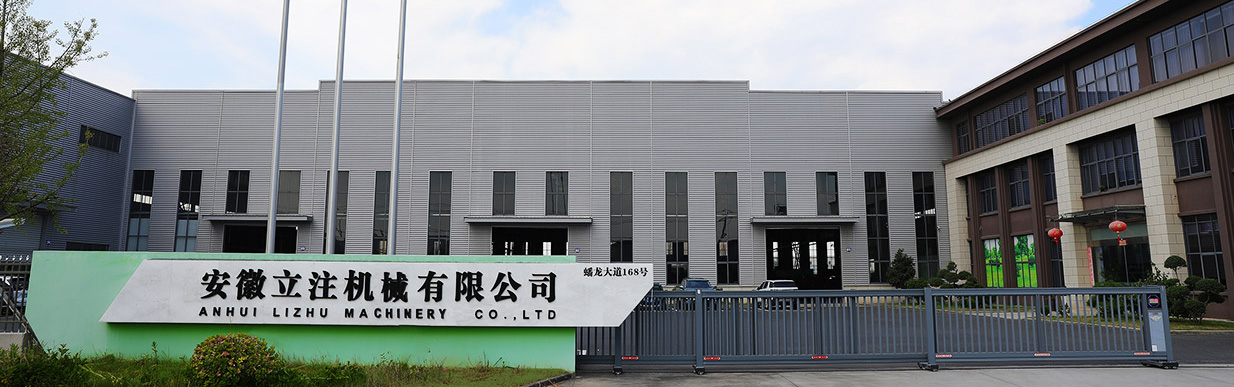
LIZHU Machinery Co., Ltd. was founded in 2011, is a leading company in high-speed precision injection molding...
View More
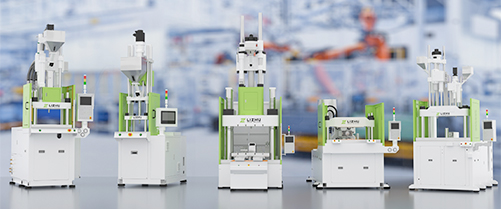
At present, we have various models of standard machines, skateboard machines, disc machines, and multi-color machines under 2000 tons.
View More
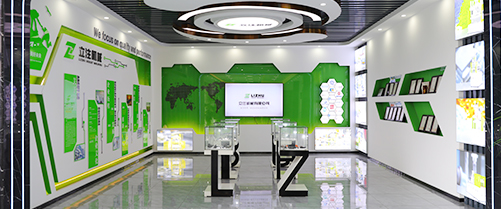
Check out the latest from the injection molding machine about the topics relevant to your industry and manufacturing process.
View More

Industry News
Home / News / Industry News / How Is a Precision Injection Molding Machine Different from a Standard Injection Molding Machine?
 Home / News / Industry News / How Is a Precision Injection Molding Machine Different from a Standard Injection Molding Machine?
 How Is a Precision Injection Molding Machine Different from a Standard Injection Molding Machine?
2026-03-13
Short Answer: A precision injection molding machine delivers tighter dimensional tolerances (typically ±0.01 mm or less), superior repeatability, and advanced closed-loop control systems — making it fundamentally different from a standard injection molding machine, which is designed for general-purpose, higher-tolerance production at lower cost.
Choosing between a precision injection molding machine and a standard model is one of the most consequential decisions in plastic part manufacturing. While both machines inject molten plastic into molds to produce parts, the similarities largely end there. Differences in mechanical design, control technology, clamping force consistency, and material compatibility create two distinct categories suited to very different manufacturing goals.
This article breaks down every critical difference — from tolerances and drive systems to cost and ideal applications — so you can make an informed decision for your production line.
What Is a Precision Injection Molding Machine?
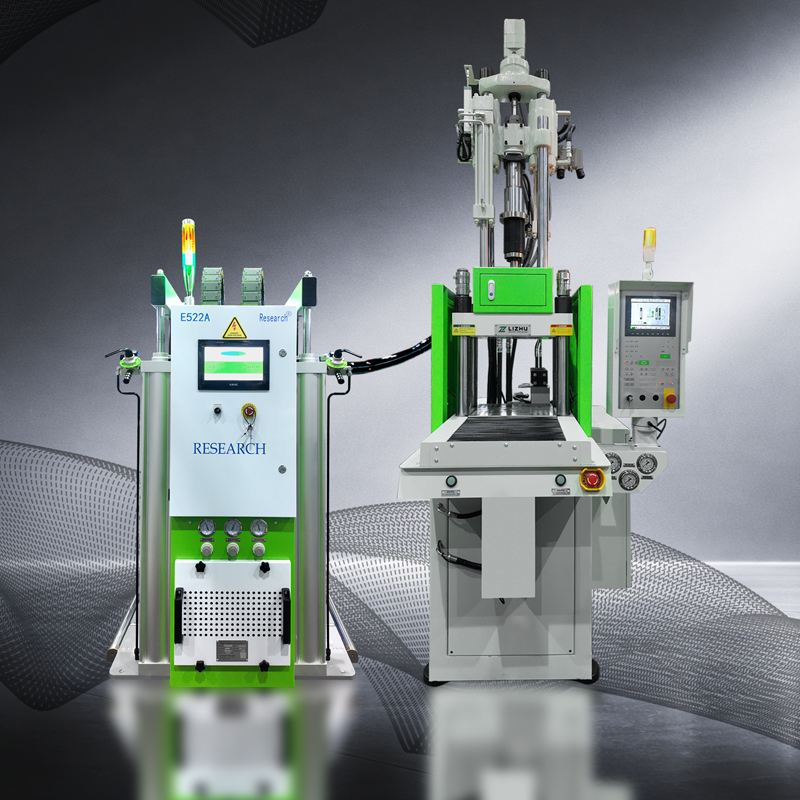
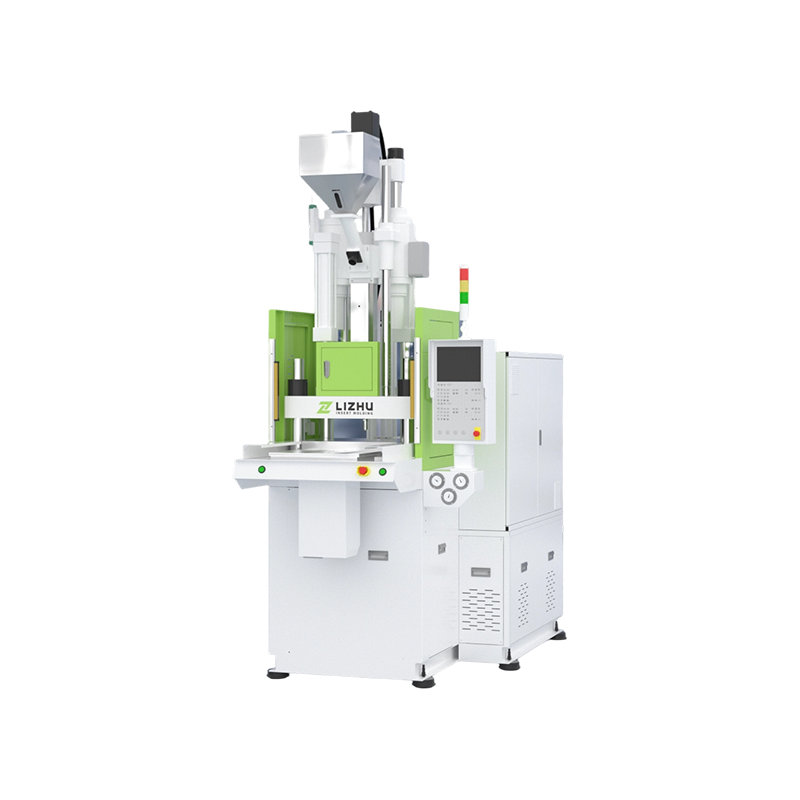
A precision injection molding machine is an advanced manufacturing system engineered to produce plastic components with extremely tight dimensional accuracy and near-perfect repeatability across high-volume production runs. These machines are built with hardened, high-rigidity frames, servo-driven hydraulic or fully electric drive systems, and sophisticated closed-loop feedback controls that monitor and adjust injection speed, pressure, temperature, and clamp force in real time.
Industries that rely on precision injection molding machines include medical device manufacturing, aerospace, automotive electronics, micro-optics, and semiconductor component production — anywhere that a deviation of even a few micrometers can result in product failure or regulatory non-compliance.
Core Differences at a Glance
The table below summarizes the most significant distinctions between the two machine types:
| Feature | Precision Injection Molding Machine | Standard Injection Molding Machine |
| Dimensional Tolerance | ±0.005 mm – ±0.02 mm | ±0.1 mm – ±0.5 mm |
| Drive System | All-electric or servo-hydraulic | Conventional hydraulic |
| Repeatability | Extremely high (Cpk ≥ 1.67) | Moderate (Cpk ≥ 1.0 – 1.33) |
| Control System | Closed-loop multi-axis feedback | Open-loop or basic closed-loop |
| Machine Rigidity | Ultra-rigid, hardened frame | Standard steel frame |
| Energy Consumption | Lower (servo/electric driven) | Higher (constant hydraulic pump) |
| Injection Speed Control | Multi-stage programmable | Single or limited stage |
| Typical Applications | Medical, optics, micro parts, electronics | Consumer goods, packaging, general plastic parts |
| Machine Cost | Significantly higher | Lower upfront investment |
| Noise & Cleanliness | Low noise, cleanroom compatible | Higher noise, oil leak risk |
Key Technical Differences Explained
1. Dimensional Tolerance and Repeatability
The most defining characteristic of a precision injection molding machine is its ability to hold extremely tight tolerances. In standard machines, acceptable part variation may be ±0.2 mm or more — entirely acceptable for a plastic bottle cap or toy component. However, a medical catheter connector, optical lens, or implantable device demands tolerances of ±0.01 mm or tighter.
Precision machines achieve this through higher screw positional accuracy (often within 0.1 mm³ shot volume repeatability), combined with real-time pressure and velocity feedback that standard machines simply do not have. Process capability indices (Cpk) of 1.67 or higher are routinely required in precision production environments.
2. Drive System: Electric vs. Hydraulic
Standard injection molding machines typically use a conventional hydraulic drive — a constantly running pump that pressurizes oil to actuate clamp, screw, and ejector movements. This approach is cost-effective but introduces variability from oil temperature changes, pump wear, and pressure fluctuations.
Precision injection molding machines predominantly use one of two superior drive configurations:
- All-Electric Drive: Servo motors control every axis independently. No hydraulic oil is used, eliminating contamination risk and dramatically improving repeatability. Response time is virtually instantaneous.
- Servo-Hydraulic Drive: A servo motor controls the hydraulic pump on demand. This combines the power of hydraulics for large clamping forces with the precision of servo control — ideal for high-tonnage precision applications.
All-electric precision machines also consume up to 50–70% less energy than comparable standard hydraulic machines because they only draw power on demand.
3. Closed-Loop Control Systems
A standard injection molding machine operates largely on preset parameters — you set injection speed, pressure, and time, and the machine attempts to follow those settings. Any deviation caused by material viscosity variation, mold temperature drift, or ambient changes is not automatically corrected.
A precision injection molding machine employs real-time closed-loop control across multiple process variables simultaneously. Cavity pressure sensors can trigger automatic switchover from injection to packing phase at the optimal moment. Temperature controllers maintain barrel zones to within ±0.5°C. Position encoders verify screw travel at sub-millimeter resolution every millisecond. This active feedback loop is what makes true precision possible at scale.
4. Machine Frame Rigidity and Platen Parallelism
In precision molding, mold alignment is critical. Precision machines use heavily reinforced machine bases, precision-ground tie bars, and platens machined to tight flatness tolerances. Platen parallelism is often maintained to within 0.02 mm across the entire mold mounting surface. Standard machines have less stringent parallelism requirements, which can result in flash, inconsistent wall thickness, or part warpage when producing fine-featured parts.
5. Injection Unit Resolution
The injection unit of a precision injection molding machine features a high-resolution screw position encoder and a servo-controlled injection axis capable of delivering precise, programmable multi-stage injection profiles. This allows molders to decelerate the screw at the exact moment before gate freeze to prevent overpacking, reduce residual stress, and eliminate sink marks — capabilities that go far beyond what a standard machine's injection system can deliver.
Where Are Precision Injection Molding Machines Used?
The applications of precision injection molding machines are concentrated in sectors where component failure is not an option:
- Medical Devices: Syringe barrels, inhalers, surgical instrument handles, diagnostic cartridge housings — all requiring ISO 13485 compliance and ultra-clean production environments.
- Micro-Optics: Camera lenses, light guides, Fresnel lenses, and endoscope components where surface roughness and form accuracy are measured in nanometers.
- Automotive Electronics: Sensor housings, connector bodies, and ECU enclosures with tight snap-fit geometries.
- Semiconductor & Electronics: IC carrier strips, micro-connectors, and fine-pitch component housings.
- Aerospace: Lightweight structural brackets, fluid management components, and interior fittings demanding both precision and material performance.
Standard injection molding machines, by contrast, excel in producing items such as plastic containers, household appliances, toys, caps and closures, and furniture components — where speed and output volume are the primary drivers.
Cost Comparison: Is a Precision Injection Molding Machine Worth It?
The upfront purchase price of a precision injection molding machine is substantially higher than a comparable standard machine — often 2× to 5× more expensive depending on tonnage and specification. However, a full total-cost-of-ownership analysis frequently favors precision machines in the long run:
| Cost Factor | Precision Machine | Standard Machine |
| Capital Cost | High | Low to medium |
| Energy Cost per Cycle | Low (servo/electric) | High (constant pump) |
| Scrap Rate | Very low | Higher |
| Maintenance Cost | Moderate (no hydraulic oil changes) | Ongoing hydraulic servicing |
| Mold Longevity | Longer (gentle, consistent clamping) | Shorter under high variability |
| Cleanroom Suitability | Yes (ISO Class 7/8 compatible) | Not typically |
For manufacturers producing high-value precision components, the reduced scrap rates, lower energy consumption, and longer mold life typically recover the premium investment within 2–4 years. For commodity production, a standard machine remains the economical choice.
How to Choose Between a Precision Injection Molding Machine and a Standard One
Ask the following questions when evaluating your requirements:
- What is the required dimensional tolerance? If drawings specify tolerances tighter than ±0.05 mm, a precision machine is necessary.
- Is the part safety-critical? Medical, aerospace, or automotive safety components demand the process capability only a precision machine can provide.
- What material will be used? Engineering resins like PEEK, LCP, PPS, and COC require precise thermal and pressure management that standard machines struggle to deliver consistently.
- What is the cleanroom requirement? All-electric precision machines are the default choice for ISO cleanroom environments due to zero hydraulic oil contamination risk.
- What is the part volume and value? High-value, lower-volume precision parts justify the capital investment; high-volume commodity parts favor standard machines.
Frequently Asked Questions (FAQ)
Q: Can a standard injection molding machine produce precision parts with a good mold?
A good mold can improve part quality, but it cannot compensate for a machine's inability to maintain consistent shot volume, injection pressure, and clamping force. For true precision parts (±0.02 mm or tighter), the machine's process control is as important as the mold design.
Q: What clamping tonnage range do precision injection molding machines come in?
Precision machines are available from micro-precision models at 5–50 tons (for micro-medical components and micro-connectors) up to large-format precision machines at 500–3,000+ tons for automotive and industrial precision parts.
Q: Are all-electric machines always better than hydraulic for precision molding?
All-electric machines offer superior precision, energy efficiency, and cleanliness. However, for very high clamping forces (above 1,500 tons), servo-hydraulic systems are often more practical and still provide excellent precision versus conventional hydraulic alternatives.
Q: What polymers are most commonly processed on precision injection molding machines?
Common materials include PEEK, PPS, LCP, COC/COP, PC, POM, PMMA, and various medical-grade nylons. These engineering and high-performance polymers require tight melt temperature and injection speed management — precisely what precision machines are designed to deliver.
Q: How does cycle time compare between precision and standard machines?
Cycle times on precision machines can be equal to or faster than standard machines due to faster servo response, quicker mold open/close speeds, and more consistent process control. The real advantage is not speed — it is quality at speed.
Q: Is a precision injection molding machine suitable for multi-cavity molds?
Yes. Precision machines are well-suited for multi-cavity molds because their tight process control ensures consistent fill balance across all cavities, reducing part-to-part variation — a critical requirement in high-volume precision production such as 16-, 32-, or 64-cavity medical molds.
Conclusion
The difference between a precision injection molding machine and a standard injection molding machine is not simply a matter of quality — it is a fundamental difference in engineering philosophy, process control capability, and application scope.
Standard machines remain indispensable for high-volume commodity production where dimensional variation is acceptable and cost per part is the primary concern. Precision injection molding machines, however, are the only viable choice when parts require tight tolerances, superior surface quality, full process traceability, and compatibility with demanding engineering materials.
Selecting the right machine type from the outset — rather than trying to force a standard machine into a precision role — is one of the highest-impact decisions a manufacturer can make for product quality, scrap reduction, regulatory compliance, and long-term profitability.
News categories
Product categories
Exhibition Information
-
How to choose high cost-effective standard vertical injection molding machines?
Oct 10,2025 -
Key points for maintenance and upkeep of the mechanical part of the vertical injection molding machine
Oct 10,2025 -
Why do the medical and 3C industries favor vertical electric injection molding machines?
Oct 10,2025
Content
- 1 What Is a Precision Injection Molding Machine?
- 2 Core Differences at a Glance
- 3 Key Technical Differences Explained
- 4 Where Are Precision Injection Molding Machines Used?
- 5 Cost Comparison: Is a Precision Injection Molding Machine Worth It?
- 6 How to Choose Between a Precision Injection Molding Machine and a Standard One
- 7 Frequently Asked Questions (FAQ)
- 8 Conclusion

-
 +86-(0)512-6598 3406
 -
 +86-138 6210 7502
 -

-
 Zhaoyao Science and Technology Park, No. 573 Ruyuan Road, Chengyang Subdistrict, Xiangcheng District, Suzhou, Jiangsu Province, China
Copyright © 2025 Suzhou Lizhu Machinery Co., Ltd. All Rights Reserved.
China precision injection molding machine manufacturers custom precision injection molding machine supplier
