 中文简体
中文简体
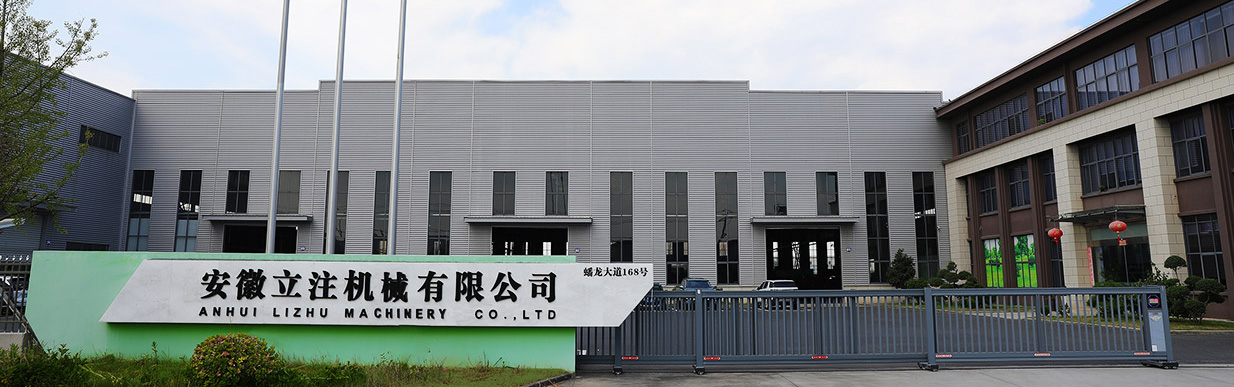
LIZHU Machinery Co., Ltd. was founded in 2011, is a leading company in high-speed precision injection molding...
View More
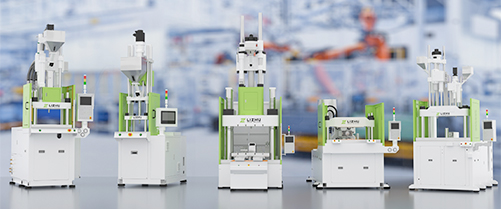
At present, we have various models of standard machines, skateboard machines, disc machines, and multi-color machines under 2000 tons.
View More
Check out the latest from the injection molding machine about the topics relevant to your industry and manufacturing process.
View More

Industry News
Home / News / Industry News / How Does a Precision Injection Molding Machine Achieve Ultra-High Accuracy?
 Home / News / Industry News / How Does a Precision Injection Molding Machine Achieve Ultra-High Accuracy?
 How Does a Precision Injection Molding Machine Achieve Ultra-High Accuracy?
2026-03-05
Modern manufacturing demands tolerances measured in microns, and the precision injection molding machine stands at the center of that demand. From medical device housings to aerospace connector components, achieving repeatable, sub-micron dimensional accuracy requires more than just good tooling — it requires a complete system engineered around control, consistency, and feedback.
What Defines a Precision Injection Molding Machine?
A precision injection molding machine is not simply a standard injection molding machine running at tighter settings. It is a purpose-built system designed with components and control architectures that standard machines fundamentally lack.
Core Defining Characteristics
- Dimensional repeatability: Part-to-part variation held within ±0.01 mm or tighter across thousands of cycles.
- Process stability: Consistent melt temperature, injection velocity, and hold pressure cycle after cycle.
- High response servo systems: Closed-loop hydraulic or all-electric drive systems that react in milliseconds.
- Rigid machine structure: Heavy-duty platens and tie-bars that resist deflection under high clamp forces.
- Advanced process monitoring: Real-time sensing of pressure, temperature, and position at multiple points.
The Five Key Systems That Drive Ultra-High Accuracy
1. Clamping System Precision
The clamping unit must apply uniform, repeatable force across the mold parting line. Any inconsistency causes flash, dimensional shift, or part warpage. High-precision machines use toggle-link mechanisms with servo-driven actuation or direct hydraulic systems with closed-loop position control. Platen parallelism is maintained to within 0.02 mm across the full clamping surface, preventing uneven mold compression.
2. Injection Unit Control
The injection unit governs how material enters the mold. Precision depends on three sub-systems working in harmony:
- Screw position control: Linear encoders track screw displacement to ±0.1 mm resolution, ensuring consistent shot volume.
- Injection velocity profiling: Multi-stage velocity control allows the machine to vary speed through the fill phase, reducing jetting, sink marks, and weld line defects.
- Switchover point accuracy: The transition from velocity-controlled fill to pressure-controlled pack is triggered by cavity pressure sensors rather than screw position alone, eliminating overpacking.
3. Melt Temperature Uniformity
Inconsistent melt temperature is one of the leading causes of dimensional variation. A precision injection molding machine addresses this through barrel zone temperature controllers accurate to ±0.5°C, non-return valve designs that minimize melt stagnation, and screw geometry optimized for the target resin to produce homogeneous melt without degradation.
4. Mold Temperature Management
Cavity surface temperature directly affects part shrinkage, surface finish, and dimensional stability. Precision operations use dedicated mold temperature controllers (MTCs) with flow monitoring, conformal cooling channel designs for uniform heat extraction, and differential thermocouple monitoring across core and cavity halves.
5. Real-Time Process Monitoring and Closed-Loop Feedback
The highest-performing precision machines integrate cavity pressure sensors directly into the mold. These sensors feed data to the machine controller, which adjusts hold pressure and cooling time in real time based on actual cavity conditions — not estimated values. This closed-loop approach compensates for batch-to-batch material variation, ambient temperature shifts, and gradual mold wear.
Precision vs. Standard Injection Molding Machine: Side-by-Side Comparison
| Feature | Standard Injection Molding Machine | Precision Injection Molding Machine |
| Dimensional Tolerance | ±0.1 – ±0.3 mm | ±0.005 – ±0.02 mm |
| Drive System | Open-loop hydraulic | Servo-hydraulic or all-electric closed-loop |
| Injection Repeatability | ±1.0% shot weight variation | ±0.1% or better |
| Cavity Pressure Sensing | Rarely included | Standard or available integration |
| Temperature Control Accuracy | ±2–5°C | ±0.3–0.5°C |
| Platen Parallelism | ±0.1 mm typical | ±0.02 mm or better |
| Typical Applications | Consumer goods, packaging, general components | Medical devices, optics, electronics, aerospace |
| Energy Efficiency | Moderate | High (especially all-electric models) |
Machine Type Comparison: Hydraulic, Servo-Hydraulic, and All-Electric
When selecting a precision injection molding machine, the drive technology is a critical variable. Each type offers distinct trade-offs in accuracy, speed, energy use, and maintenance:
| Criteria | Hydraulic | Servo-Hydraulic | All-Electric |
| Accuracy | Moderate | High | Highest |
| Energy Use | High | Medium | Low |
| Cleanliness | Risk of oil contamination | Reduced risk | Cleanroom compatible |
| Clamp Force Range | Very wide | Wide | Small to medium |
| Maintenance | Higher (hydraulic seals, fluid) | Moderate | Lower |
| Best For | Heavy-tonnage general use | Versatile precision production | Medical, optical, micro-molding |
Material Selection and Its Impact on Precision Outcomes
Even the most advanced precision injection molding machine cannot overcome poorly selected or inconsistently conditioned material. The resin's viscosity index, moisture content, and shrinkage behavior all directly affect dimensional outcomes.
High-Performance Resins Commonly Used in Precision Molding
- PEEK (Polyether ether ketone): Exceptional dimensional stability, used in implantable medical and aerospace parts.
- LCP (Liquid Crystal Polymer): Extremely low and predictable shrinkage; suited for micro-connectors and electronics.
- POM (Acetal/Delrin): Excellent stiffness and low friction; widely used for precision gears and bushings.
- PC (Polycarbonate): Optical-grade transparency with tight tolerance potential when properly dried and processed.
- PA66 GF30 (Glass-filled Nylon): Reduced shrinkage anisotropy compared to unfilled grades; common in structural precision components.
Mold Design: The Mechanical Foundation of Accuracy
A precision injection molding machine and a poorly designed mold cannot produce precision parts. Mold engineering must address:
- Steel selection: H13 or S136 tool steels provide the hardness and polishability required for fine-feature cavities.
- Gate location and type: Valve-gated hot runner systems eliminate gate vestige variation and provide precise fill control.
- Venting: Inadequate venting causes diesel effect burning and short shots; precision molds use calculated vent depths of 0.01–0.03 mm.
- Ejection system: Balanced ejector pin placement prevents part distortion during extraction.
- Thermal design: Conformal-cooled inserts (often 3D-printed in tool steel) achieve cooling uniformity impossible with conventional drilled channels.
Industry Applications Requiring Precision Injection Molding
The demand for precision injection molding machines is concentrated in industries where dimensional failure has severe consequences:
| Industry | Example Parts | Typical Tolerance Requirement |
| Medical Devices | Surgical instrument handles, catheter components | ±0.01 mm |
| Optics | Camera lenses, laser collimators, light guides | ±0.005 mm surface form |
| Electronics | Micro-connectors, IC housings, EMI shielding frames | ±0.02 mm |
| Aerospace | Sensor housings, fluid connectors, structural brackets | ±0.05 mm |
| Automotive | Fuel system valves, sensor covers, ECU enclosures | ±0.05–0.1 mm |
Frequently Asked Questions
What tolerance can a precision injection molding machine reliably hold?
Well-configured precision injection molding machines operating with stable materials and optimized molds can achieve part-to-part dimensional repeatability of ±0.005 to ±0.02 mm. Achieving the tighter end of this range typically requires all-electric drive systems, in-cavity pressure sensing, and rigorously dried engineering resins.
Is an all-electric machine always better for precision molding?
All-electric machines offer the highest repeatability, lowest energy consumption, and cleanroom compatibility, making them the preferred choice for medical, optical, and micro-molding applications. However, for large-tonnage precision work — such as automotive structural parts requiring clamp forces above 1,500 tonnes — servo-hydraulic or hybrid machines often provide a better balance of precision and power.
How does cavity pressure sensing improve accuracy?
Cavity pressure sensors measure actual melt pressure inside the mold in real time. This allows the machine controller to detect when the cavity is properly filled and switch to hold phase at the optimal moment — regardless of material viscosity fluctuations. The result is a dramatic reduction in overpacked or underpacked parts, which is one of the primary sources of dimensional variation in conventional molding.
Can a standard injection molding machine be upgraded to precision level?
Partial upgrades are possible — adding servo-pump systems, cavity pressure monitoring, or upgrading temperature controllers can meaningfully improve repeatability. However, if the machine's base structure, platen design, or original control architecture is not built for precision, there are physical limits that retrofitting cannot overcome. For applications requiring sub-0.02 mm tolerances, a purpose-built precision injection molding machine is the appropriate investment.
What role does mold temperature play in achieving tight tolerances?
Mold temperature controls the cooling rate, which governs polymer crystallinity, internal stress development, and final shrinkage. A ±1°C variation in mold surface temperature can produce measurable dimensional shifts in crystalline polymers like POM or PA. Precision operations typically maintain mold temperature variation within ±0.5°C across the cavity surface using dedicated mold temperature controllers and monitored coolant circuits.
How is process validation conducted for precision injection molding?
Process validation for precision injection molding machines in regulated industries follows IQ/OQ/PQ protocols (Installation Qualification, Operational Qualification, Performance Qualification). Statistical process control (SPC) charts track Cpk values — most medical-grade processes require a minimum Cpk of 1.67, meaning the process produces parts well within tolerance even accounting for natural variation.
Conclusion
Ultra-high accuracy from a precision injection molding machine is not a product of any single technology — it is the result of a tightly integrated system where clamping mechanics, injection control, thermal management, real-time feedback, material science, and mold engineering all operate at the same level of precision. When any element in this chain falls short, the system's overall capability degrades.
For manufacturers operating in medical, optical, electronics, or aerospace sectors, the investment in a true precision injection molding machine — paired with process validation and capable mold design — delivers not just tight tolerances, but the repeatable consistency that high-stakes production demands.
News categories
Product categories
Exhibition Information
-
How to choose high cost-effective standard vertical injection molding machines?
Oct 10,2025 -
Key points for maintenance and upkeep of the mechanical part of the vertical injection molding machine
Oct 10,2025 -
Why do the medical and 3C industries favor vertical electric injection molding machines?
Oct 10,2025
Content
- 1 What Defines a Precision Injection Molding Machine?
- 2 The Five Key Systems That Drive Ultra-High Accuracy
- 3 Precision vs. Standard Injection Molding Machine: Side-by-Side Comparison
- 4 Machine Type Comparison: Hydraulic, Servo-Hydraulic, and All-Electric
- 5 Material Selection and Its Impact on Precision Outcomes
- 6 Mold Design: The Mechanical Foundation of Accuracy
- 7 Industry Applications Requiring Precision Injection Molding
- 8 Frequently Asked Questions
- 8.1 What tolerance can a precision injection molding machine reliably hold?
- 8.2 Is an all-electric machine always better for precision molding?
- 8.3 How does cavity pressure sensing improve accuracy?
- 8.4 Can a standard injection molding machine be upgraded to precision level?
- 8.5 What role does mold temperature play in achieving tight tolerances?
- 8.6 How is process validation conducted for precision injection molding?
- 9 Conclusion

-
 +86-(0)512-6598 3406
 -
 +86-138 6210 7502
 -

-
 Zhaoyao Science and Technology Park, No. 573 Ruyuan Road, Chengyang Subdistrict, Xiangcheng District, Suzhou, Jiangsu Province, China
Copyright © 2025 Suzhou Lizhu Machinery Co., Ltd. All Rights Reserved.
China precision injection molding machine manufacturers custom precision injection molding machine supplier
