中文简体
中文简体



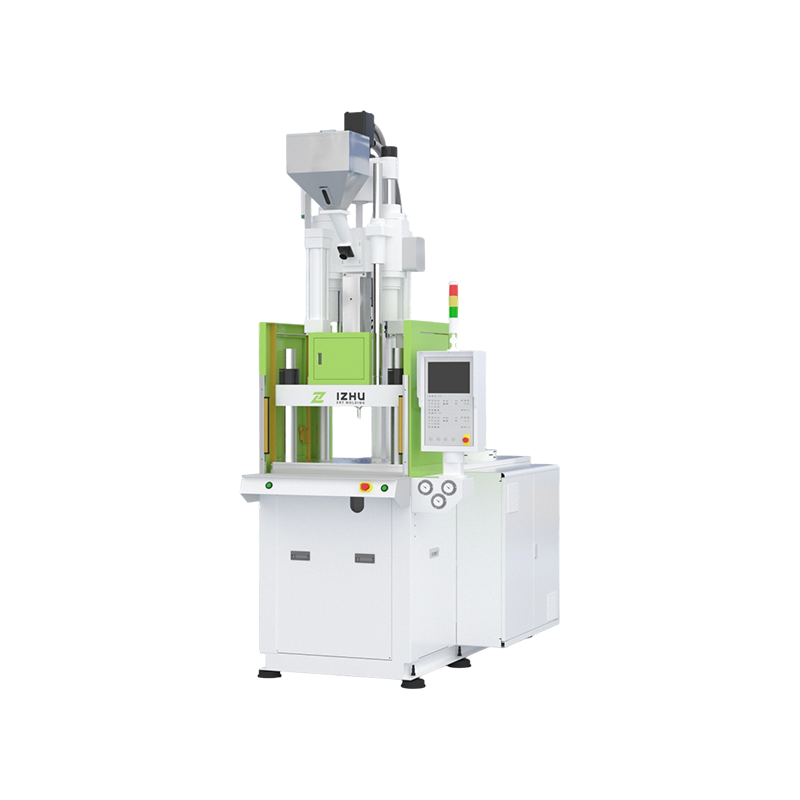
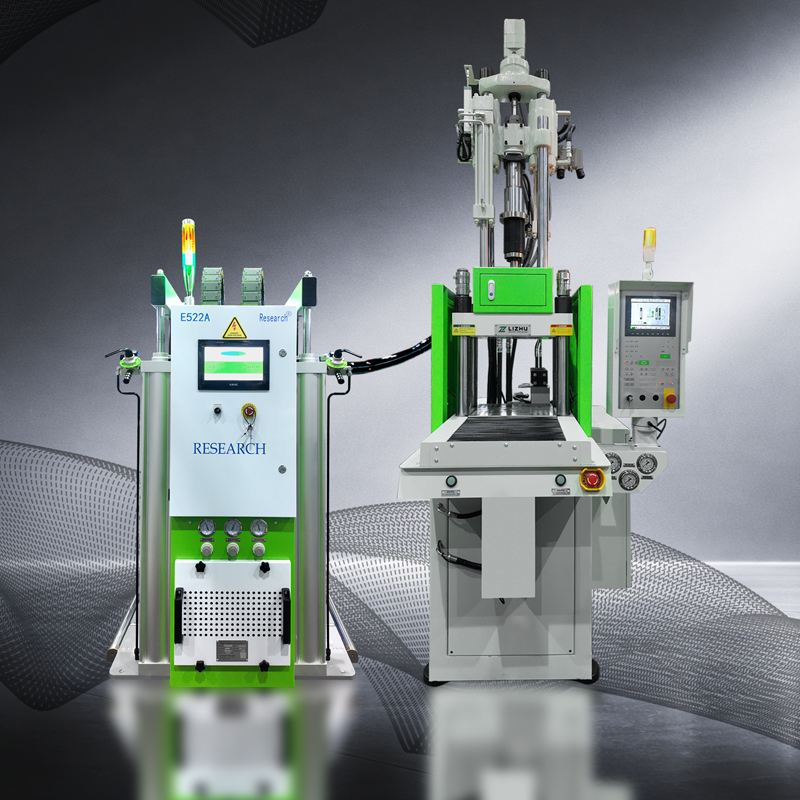
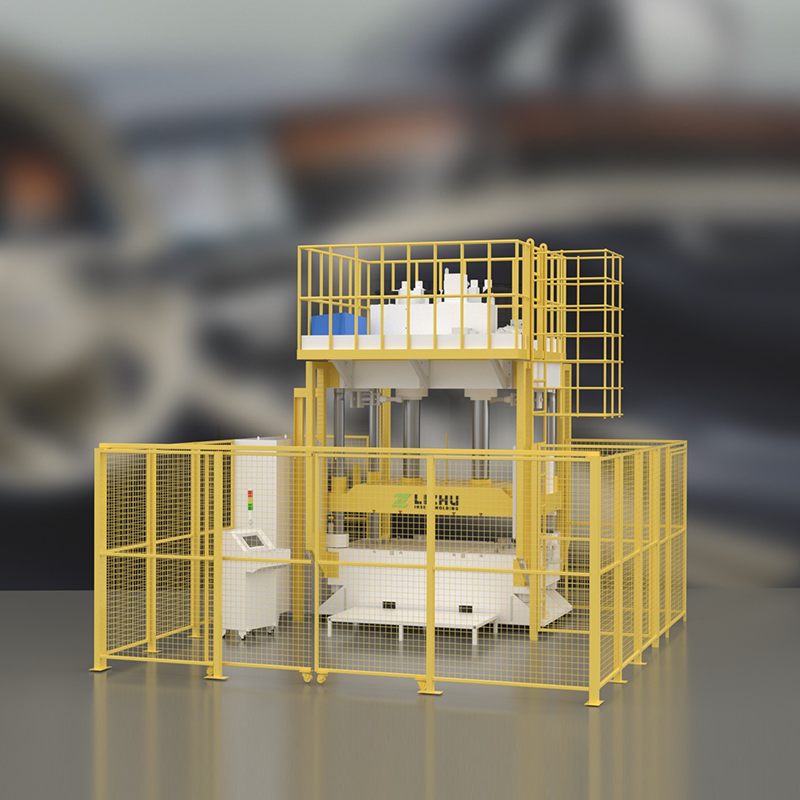
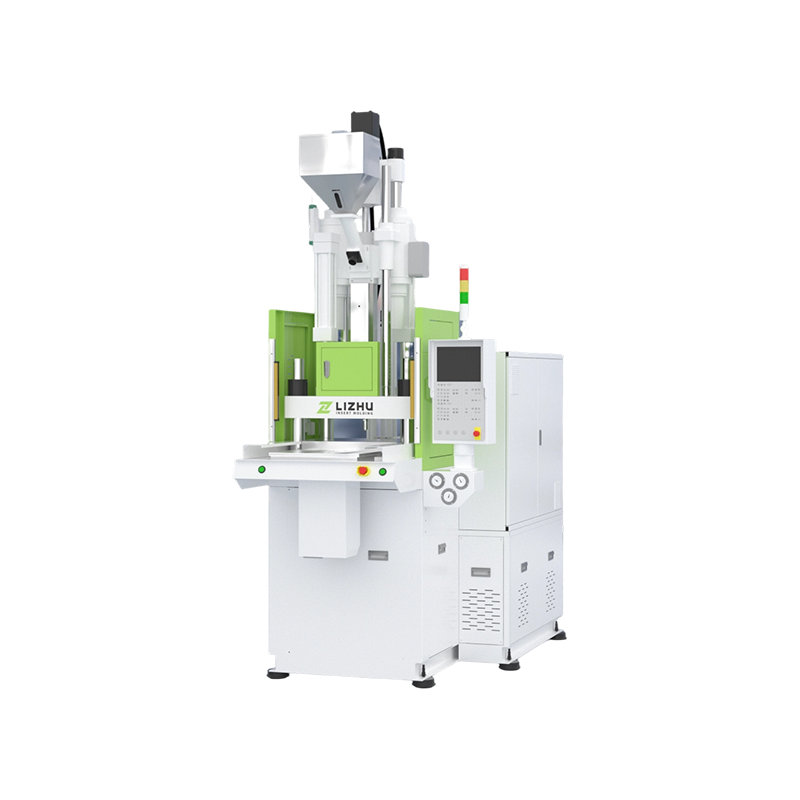
A precision injection molding machine is specialized equipment engineered to hold extremely tight tolerances — often within ±0.01 to ±0.05 millimeters — using enhanced control systems, higher-resolution servo motors, and more rigid clamping units than standard injection molding machines, making it the equipment of choice for industries like medical devices, optics, electronics connectors, and micro-mechanical components where even tiny dimensional variations can cause a part to fail. Understanding what separates precision machines from general-purpose equipment helps explain why certain manufacturers invest significantly more in tooling and machine capability for parts that might look deceptively simple. This guide breaks down the technology, key specifications, and comparison factors that define true precision injection molding.
Why Standard Injection Molding Machines Can't Achieve Precision-Level Tolerances
Standard injection molding machines are designed for general-purpose production where tolerances of ±0.1 to ±0.5 millimeters are typically acceptable, and their hydraulic systems, control resolution, and structural rigidity simply aren't engineered to consistently hold the much tighter tolerances precision applications demand. The difference isn't just a matter of careful operation — it comes down to fundamental differences in machine design, including how precisely the injection screw position, melt pressure, and mold clamping force can be controlled and repeated across thousands or millions of cycles.
Research and technical guidance published by plastics engineering organizations such as the Society of Plastics Engineers (SPE) consistently emphasizes that dimensional consistency in injection molding depends heavily on process repeatability — meaning the machine's ability to reproduce the exact same injection speed, pressure, and cooling profile cycle after cycle — rather than any single setting in isolation. This is precisely the capability that separates precision machines from general-purpose equipment at a fundamental engineering level.
How Precision Injection Molding Machines Achieve Tighter Tolerances
Precision machines achieve their tighter tolerances through four key engineering improvements: higher-resolution servo-driven control systems, more rigid machine frames that resist deflection under clamping force, more precise temperature control zones, and advanced shot-to-shot monitoring systems that detect and correct for minor process variation in real time.
Servo-Driven Control Systems
Precision machines typically use all-electric or hybrid servo-driven systems rather than purely hydraulic drives, since servo motors offer significantly finer positional control and faster, more repeatable response than traditional hydraulic valve systems. This translates directly into more consistent injection speed profiles and screw position accuracy, both of which strongly influence final part dimensions, especially in thin-walled or geometrically complex components.
Rigid Machine Frame and Platen Design
A more rigid frame and platen structure minimizes deflection under the high clamping forces required during injection, since even microscopic frame flex can translate into measurable dimensional variation at the part level, particularly for parts with tight flatness or parallelism requirements.
Multi-Zone Precision Temperature Control
Precision machines often include more numerous and more finely controlled barrel heating zones, along with tighter mold temperature control tolerances, since melt temperature consistency directly affects material shrinkage rates and, by extension, final part dimensions after cooling.
Real-Time Process Monitoring and Feedback
Advanced sensors monitoring cavity pressure, melt temperature, and injection speed feed data back into the control system in real time, allowing the machine to make micro-adjustments shot to shot rather than relying solely on fixed, pre-programmed settings that can't account for minor material or environmental variation during a long production run.
Precision vs. Standard Injection Molding Machines
Comparing precision and standard machines side by side highlights exactly where the additional capability and cost come from, making it easier to determine which equipment category actually fits a specific part's requirements.
| Factor | Precision Injection Molding Machine | Standard Injection Molding Machine |
| Typical achievable tolerance | ±0.01 to ±0.05 mm | ±0.1 to ±0.5 mm |
| Drive system | All-electric or hybrid servo | Often hydraulic |
| Process monitoring | Real-time cavity pressure and shot-to-shot feedback | Basic process parameter monitoring |
| Equipment cost | Significantly higher | Lower |
| Typical application | Medical devices, optics, micro-components | Consumer goods, general packaging, housings |
Caption: Comparison of precision and standard injection molding machines across achievable tolerance, drive system, monitoring, cost, and typical applications.
Which Industries Rely Most Heavily on Precision Injection Molding?
Medical devices, optics, electronics, and micro-mechanical component manufacturing rely most heavily on precision injection molding, since these industries routinely produce parts where even very small dimensional deviations can cause functional failure, regulatory non-compliance, or safety risk.
| Industry | Example Components | Why Precision Matters |
| Medical devices | Syringe components, surgical tool housings, diagnostic cartridges | Patient safety, regulatory compliance, fluid-tight sealing |
| Optics | Camera lenses, light pipes, optical sensor housings | Optical performance directly tied to surface and dimensional precision |
| Electronics | Connectors, micro-switch housings, circuit board components | Tight tolerances needed for reliable mechanical and electrical fit |
| Micro-mechanical components | Gears, micro-fasteners, precision linkage parts | Mechanical function depends on extremely tight fit and clearance |
Caption: Industries most reliant on precision injection molding, with example components and the specific reasons tight tolerance matters in each case.
What Role Does Clamping Force and Machine Tonnage Play in Precision Molding?
Clamping force must be precisely matched to the mold's projected part area and cavity pressure, since insufficient clamping force allows the mold to separate slightly during injection (called flash or mold breathing), while excessive force can cause unnecessary wear and energy consumption without improving part quality.
Precision machines typically offer finer clamping force adjustment increments and more accurate closed-loop force monitoring compared to standard equipment, allowing operators to dial in the exact force needed for a specific mold rather than working with broader, less precise force ranges. This precision becomes especially important for multi-cavity precision molds, where even slight clamping force inconsistency across the mold's surface can produce dimensional variation between cavities producing what should be identical parts.
How Material Selection Affects Achievable Precision
Material shrinkage rate, flow characteristics, and thermal stability all directly affect how consistently a precision machine can hold tight tolerances, meaning material selection and machine capability have to be considered together rather than treating precision purely as a machine specification independent of the material being processed.
- Shrinkage rate consistency — Materials with highly consistent, well-characterized shrinkage behavior (such as many engineering thermoplastics) are easier to mold to tight tolerances than materials with more variable shrinkage depending on cooling rate and wall thickness.
- Melt flow stability — Materials with stable, predictable melt flow under varying shear rates fill precision mold cavities more consistently than materials prone to flow instability or viscosity fluctuation.
- Moisture sensitivity — Hygroscopic materials that absorb ambient moisture can experience inconsistent processing behavior if not properly dried beforehand, introducing a variable that even an excellent precision machine cannot fully compensate for.
- Thermal degradation sensitivity — Materials prone to degrading at slightly elevated processing temperatures require tighter barrel temperature control, reinforcing the connection between machine capability and material-specific processing requirements.
Why Mold Design and Construction Are Just as Important as the Machine
A precision injection molding machine cannot overcome a poorly designed or imprecisely manufactured mold, since the mold itself defines the part's core geometry and the cavity surfaces that directly determine final dimensional accuracy — making mold quality just as critical to overall precision as the machine producing the parts.
Precision molds are typically manufactured using high-accuracy CNC machining, electrical discharge machining (EDM), and often undergo dimensional verification using coordinate measuring machines (CMMs) before ever being installed in a production machine. Even a few microns of cavity machining error can translate directly into out-of-tolerance parts regardless of how capable the molding machine itself is, which is why precision injection molding programs typically invest as heavily in mold-making capability and quality verification as they do in the molding machines themselves.
How Cleanroom Environments and Automation Support Precision Production
Many precision injection molding operations, particularly in medical device manufacturing, integrate cleanroom environments and automated material handling directly with the molding process, since airborne particulate contamination and manual handling variability can both introduce defects that even a highly capable precision machine cannot correct after the fact.
Cleanroom Integration
Cleanroom-integrated molding cells house the precision machine, robotic part removal system, and often downstream packaging equipment within a controlled environment that limits airborne particles to a specified classification level. For medical and pharmaceutical-adjacent applications, this is frequently driven by regulatory requirements as much as by pure dimensional precision concerns, since particulate contamination on a part surface can be just as critical a quality issue as a dimensional deviation in these industries.
Robotic Part Handling
Robotic end-of-arm tooling removes finished parts from the mold with consistent, repeatable motion and force, avoiding the part-to-part handling variability that manual removal can introduce, particularly for delicate or geometrically complex precision parts that could deform or be damaged by inconsistent manual handling. This automation also enables continuous, unattended production runs that would be impractical to sustain with manual part removal, particularly for high-cavitation precision molds producing very high part volumes per cycle.
Frequently Asked Questions About Precision Injection Molding Machines
What size parts can a precision injection molding machine produce?
Precision injection molding spans an extremely wide size range, from micro-molded components weighing fractions of a gram with features measured in microns, up to larger precision parts weighing several hundred grams that still require tight tolerances for proper fit and function. The defining characteristic is the tolerance requirement relative to part size, not the absolute part dimensions themselves, which is why both micro-molding and larger precision parts fall under the same general category of precision injection molding.
Is precision injection molding the same as micro-molding?
Not exactly — micro-molding refers specifically to producing extremely small parts, often weighing fractions of a gram, while precision injection molding refers more broadly to achieving tight tolerances regardless of overall part size. Micro-molding is generally considered a specialized subset of precision molding, since virtually all micro-molded parts require precision-level tolerance control, but not all precision-molded parts are necessarily micro-sized.
Why do precision injection molding machines cost significantly more than standard machines?
The higher cost reflects more sophisticated servo control systems, more rigid and precisely manufactured structural components, advanced sensor and feedback systems, and generally more stringent quality control during the machine's own manufacturing process. These added engineering and manufacturing costs are necessary to achieve and reliably repeat the tight tolerances precision applications require, rather than being simply a premium brand markup without underlying technical justification.
Can a standard injection molding machine be upgraded to achieve precision-level tolerances?
Some improvements are possible through retrofitting more advanced control systems or sensors, but fundamental limitations in frame rigidity, drive system precision, and overall machine architecture generally cannot be fully overcome through aftermarket upgrades alone. In most cases, achieving genuine precision-level tolerance and repeatability requires equipment specifically engineered from the ground up for that purpose, rather than incrementally improving a standard machine's existing capability.
How is dimensional accuracy verified after precision molding?
Verification typically involves coordinate measuring machines (CMMs), optical comparators, or other high-precision metrology equipment capable of measuring features to the same micron-level resolution the molding process is targeting. Statistical process control methods are also commonly applied across production runs to confirm that dimensional consistency is maintained not just on individual sample parts, but reliably across the full production volume over time.
Do precision injection molding machines run slower than standard machines?
Cycle time depends more on part geometry, wall thickness, and material cooling characteristics than on whether the machine is classified as precision or standard, and modern precision machines with servo-driven systems can often achieve comparable or even faster cycle times than older hydraulic standard machines, despite their tighter tolerance capability. The misconception that precision automatically means slower production has become increasingly outdated as servo-driven precision technology has matured.
Conclusion
A precision injection molding machine earns its classification through a combination of servo-driven control precision, rigid mechanical construction, advanced real-time process monitoring, and tight repeatability across every production cycle — capabilities that go well beyond simply running a standard machine more carefully. Industries like medical devices, optics, and electronics depend on this level of capability specifically because the tolerance requirements of their components leave no margin for the variability standard equipment naturally produces.
Whether you're specifying equipment for a new precision manufacturing program or simply trying to understand why certain parts demand specialized machinery, recognizing that precision comes from the combined performance of machine, mold, and material — not any single factor alone — provides the clearest framework for evaluating what true precision injection molding actually requires.