中文简体
中文简体



A silicone injection molding machine works by precisely injecting liquid silicone rubber (LSR) or high-consistency rubber (HCR) into a heated, closed mold under controlled pressure, where it vulcanizes into a finished part within seconds to minutes. Unlike thermoplastic injection molding, silicone processing reverses the temperature logic: the material is kept cold during injection and cured by heat inside the mold. Understanding how this machine functions — and how to select the right one — is critical for manufacturers in medical, automotive, consumer, and electronics industries.
1. What Is a Silicone Injection Molding Machine
A silicone injection molding machine is a specialized industrial press designed to process silicone rubber — either in liquid or solid form — into precisely shaped components through an injection-and-cure cycle. It differs fundamentally from standard thermoplastic injection molding equipment in its temperature management, material feeding system, and clamping requirements.
The global silicone rubber market was valued at approximately USD 19.2 billion in 2024 and is projected to grow at a compound annual growth rate (CAGR) of 6.1% through 2030. This growth is driven by surging demand for medical-grade components, electric vehicle seals, infant care products, and wearable electronics — all of which rely heavily on silicone injection molding machines for high-volume, precision manufacturing.
Two primary silicone materials are processed on these machines:
- Liquid Silicone Rubber (LSR): A two-part platinum-catalyzed system supplied in drums, processed at room temperature injection into a hot mold. Ideal for intricate, high-precision, high-volume parts.
- High-Consistency Rubber (HCR): A solid, gum-like silicone compound processed similarly to conventional rubber, often using transfer or compression molding but also adaptable to injection equipment.
2. How the Silicone Injection Molding Process Works
The silicone injection molding process follows a precise six-stage cycle that begins with material metering and ends with part ejection — typically completing in 15 to 120 seconds depending on part geometry and wall thickness.
Stage 1: Material Metering and Mixing
For LSR processing, the machine draws equal volumes of Component A (base polymer) and Component B (crosslinker and catalyst) from separate drums using a precision metering pump. The ratio is typically 1:1 by volume. A static or dynamic mixer blends the two components uniformly before they enter the injection barrel. Pigments or additives may be introduced at this stage via a third metering stream. Mixing consistency directly affects cure uniformity — deviations greater than 2% in the A:B ratio can result in incomplete vulcanization and part rejection.
Stage 2: Cold Runner Injection
The mixed LSR is kept at a controlled low temperature — typically 5 to 15 degrees Celsius — as it travels through the cold runner system toward the mold. This prevents premature vulcanization (also called scorch) before the material reaches the mold cavity. The injection unit pushes the silicone into the mold at pressures ranging from 5 to 30 MPa, depending on part complexity and viscosity.
Stage 3: Mold Filling
As the silicone enters the heated mold cavity (typically held at 160 to 220 degrees Celsius), it begins to flow and fill the geometry. The mold is designed with precise venting to allow air escape and prevent short shots. Gate design — whether pin gates, tunnel gates, or edge gates — affects material flow and surface finish on the finished part.
Stage 4: Vulcanization (Cure)
Vulcanization is the chemical crosslinking reaction that transforms liquid silicone into an elastic solid. The reaction rate is temperature-dependent: at 180 degrees Celsius, a 2mm wall section typically cures in 15 to 25 seconds. Thicker sections require proportionally longer cure times. The mold remains clamped under full pressure throughout this stage to prevent flash and maintain dimensional accuracy.
Stage 5: Mold Opening and Part Ejection
After cure, the mold opens and the part is ejected — typically using ejector pins, vacuum suction, or a combination of both. Because silicone is inherently flexible, it can be demolded from undercuts that would trap rigid thermoplastic parts. Many advanced machines use robotic arms for automated part removal, reducing cycle time by 3 to 8 seconds per shot.
Stage 6: Post-Cure (Optional)
Medical-grade and food-contact silicone parts often require post-curing in a secondary oven at 200 degrees Celsius for 2 to 4 hours. This drives off residual volatile compounds (including trace platinum catalyst byproducts) and stabilizes physical properties. Post-cure is not required for all applications but is standard practice in regulated industries.
3. Types of Silicone Injection Molding Machines
Silicone injection molding machines are classified primarily by their clamping mechanism and the type of silicone material they process. Selecting the wrong machine type for your material or part geometry results in quality failures and wasted tooling investment.
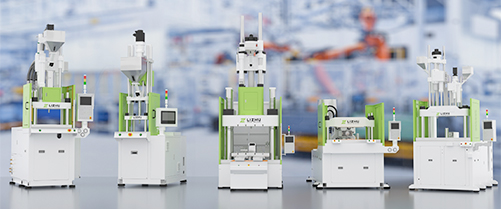
Horizontal Clamping Machines
The most common configuration. The mold opens horizontally, and the injection unit is aligned along the same axis. Horizontal machines are well-suited for multi-cavity tools, automated part removal, and integration with conveyor systems. Clamping forces range from 50 to 1,000+ tonnes depending on the model. These machines dominate high-volume production of automotive seals, consumer product components, and medical disposables.
Vertical Clamping Machines
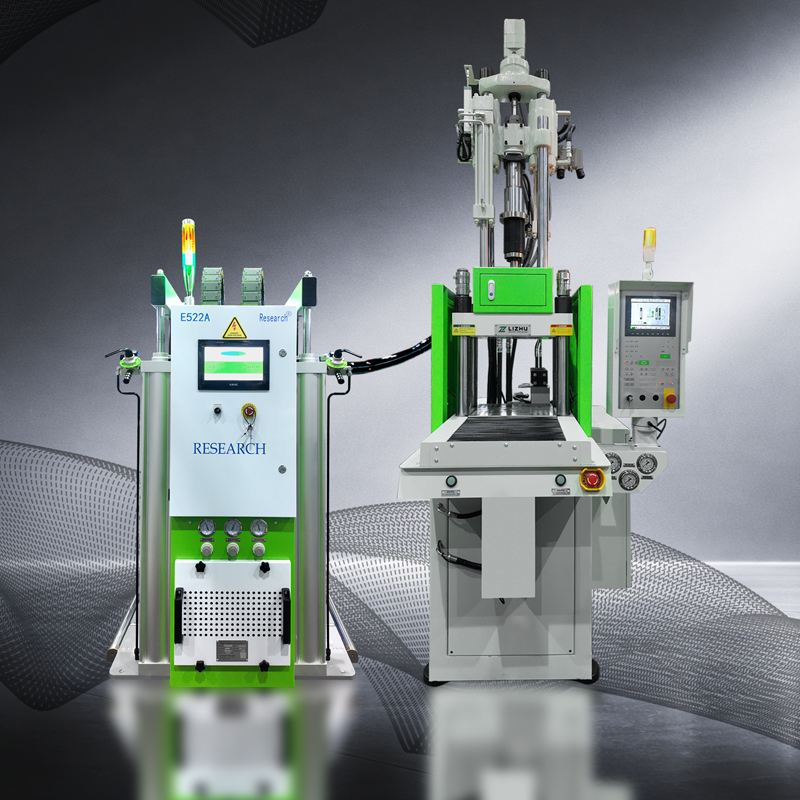
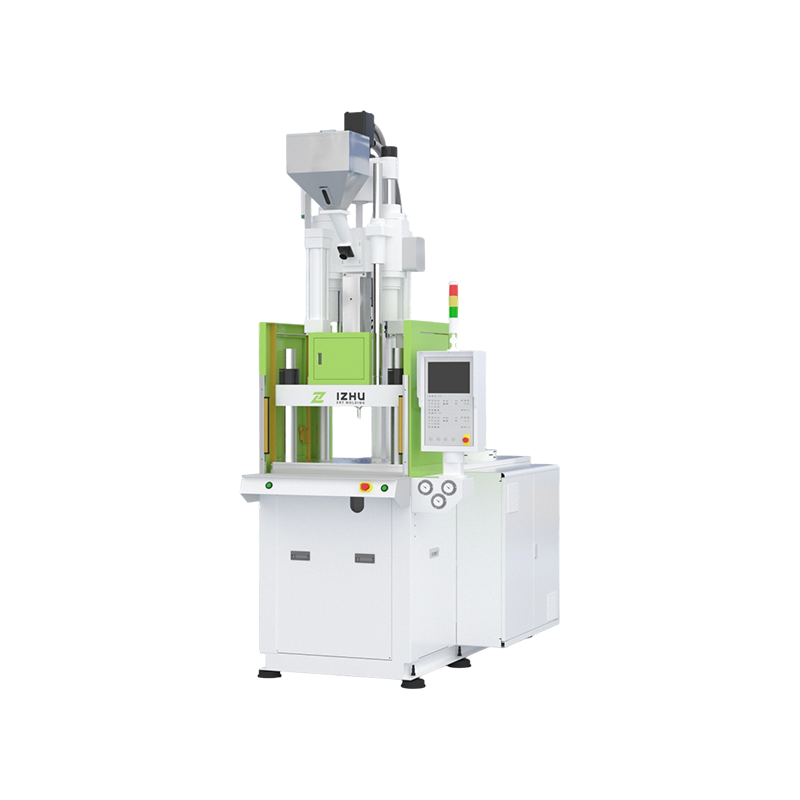
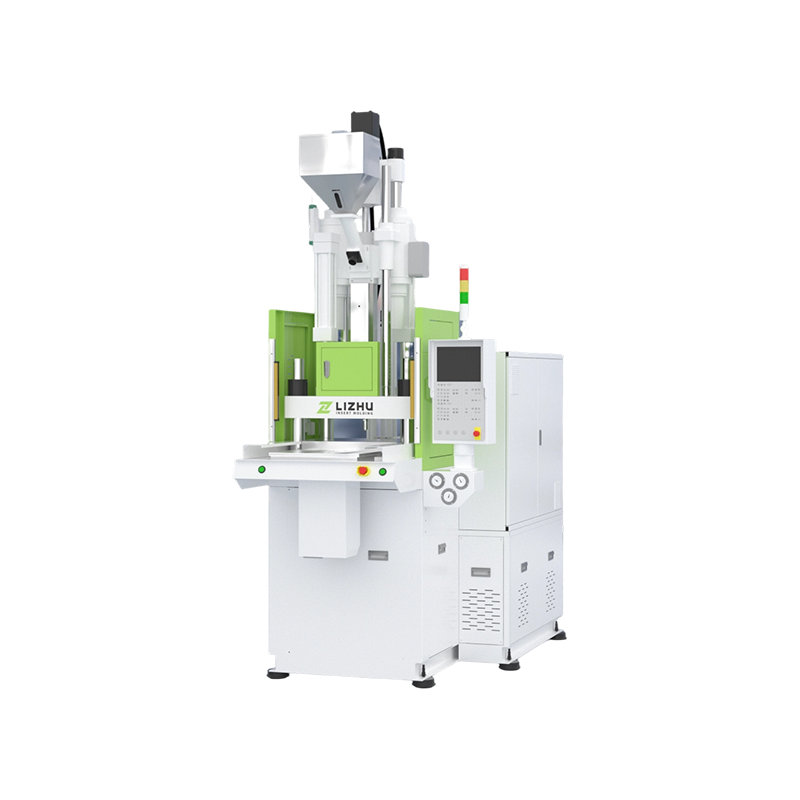
Vertical machines open the mold along the vertical axis. They are preferred for insert molding operations — where metal or plastic inserts are placed into the lower mold half before the shot — because gravity holds inserts in place during loading. They are commonly used for producing electrical connectors, overmolded sensors, and multi-material components. Typical clamping force range: 30 to 400 tonnes.
LSR-Specific Injection Units
Dedicated LSR injection molding machines integrate a cold runner system and two-component metering pump directly into the machine's injection unit. They are optimized for zero-waste, flashless production of precision LSR components. Some models support shot weights as small as 0.1 grams — critical for manufacturing miniaturized medical valves, micro-seals, and wearable sensor housings.
HCR Transfer and Injection Machines
High-consistency rubber is processed on machines that can accommodate a pre-formed rubber charge. Transfer molding presses are common for HCR, pushing the compound from a central pot into mold cavities via a plunger. Modified injection presses with a screw-and-barrel feeding system can also process HCR, though the equipment requires higher mechanical force due to HCR's much greater viscosity compared to LSR.
4. Key Components and Their Functions
Every silicone injection molding machine consists of five functional subsystems, each of which must perform reliably for the process to produce consistent, defect-free parts.
- Metering and mixing unit: Draws Components A and B from supply drums, maintains precise volumetric ratio (typically 1:1), and delivers homogenously mixed material to the injection barrel. Pump accuracy of plus or minus 0.5% is standard on modern machines.
- Injection unit (barrel and plunger or screw): Delivers a precise shot volume of mixed silicone into the mold at controlled speed and pressure. LSR machines typically use a plunger-type injector rather than a reciprocating screw, to avoid heat buildup that could cause scorch.
- Cold runner system: A thermally isolated manifold and runner network that maintains material temperature below 15 degrees Celsius between the injection unit and the mold gate. Cold runners eliminate material waste in the runner — a critical advantage over hot runners in thermoplastic molding, which are reversed here.
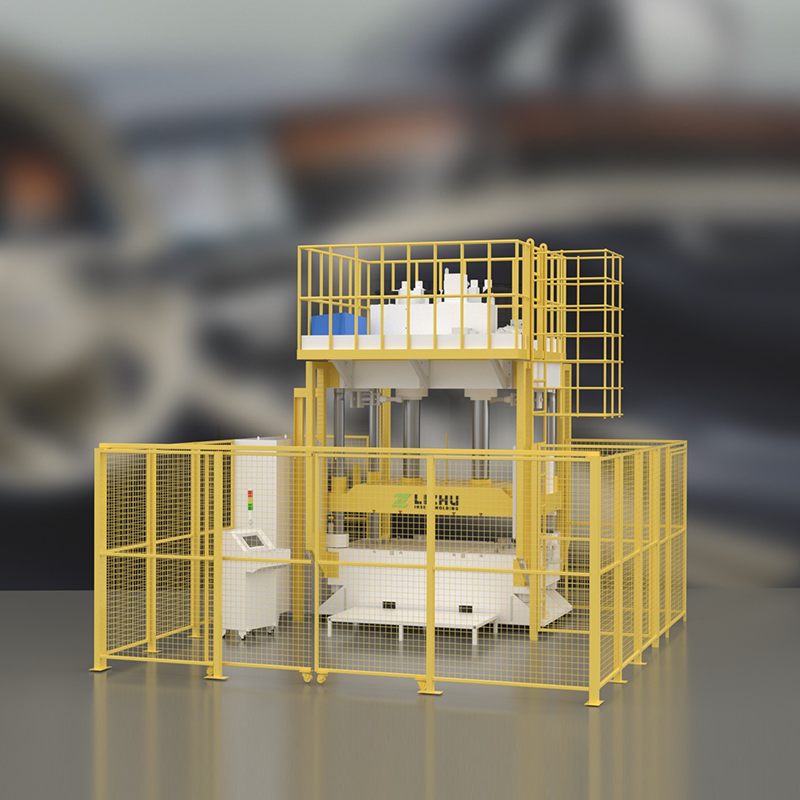
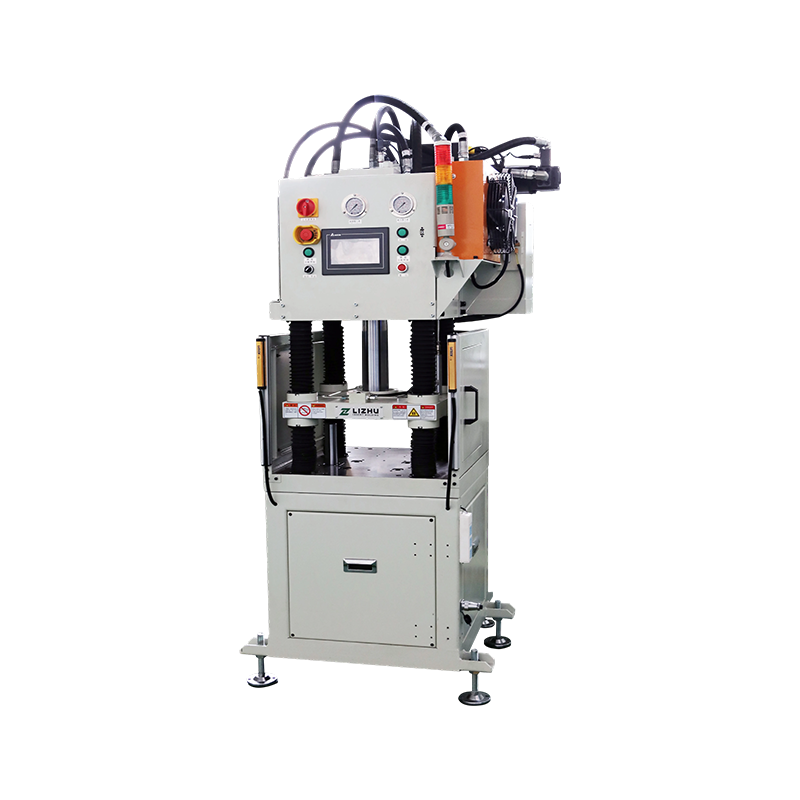
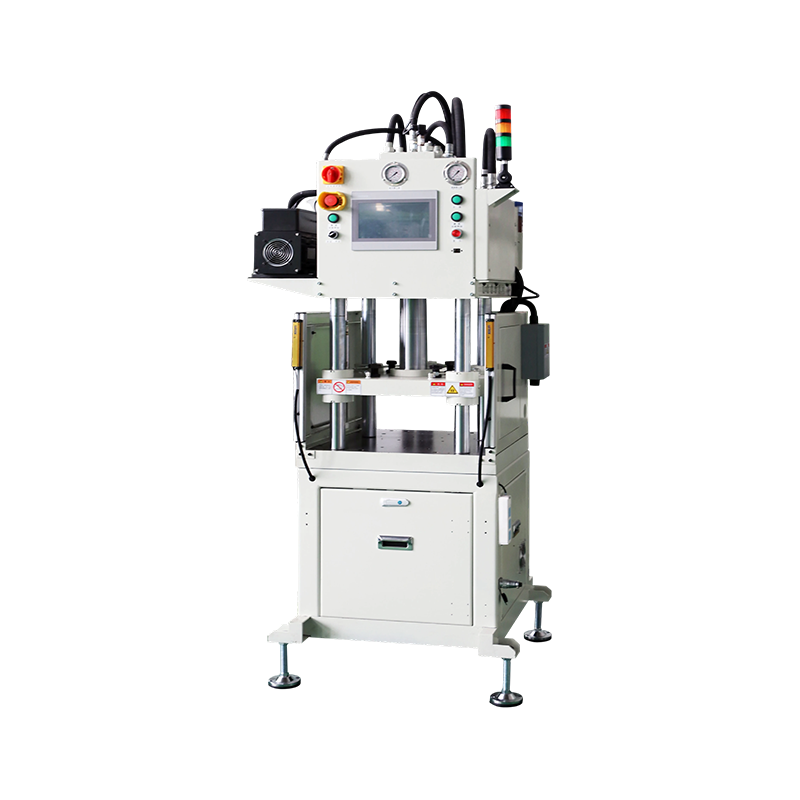
- Clamping unit: Applies and maintains closing force on the mold during injection and cure. Clamping force must be sufficient to resist the injection pressure across the total projected area of all cavities. Insufficient clamping causes flash; excessive force can damage the mold.
- Mold temperature control unit (TCU): Maintains the mold at a precisely defined cure temperature — typically 160 to 220 degrees Celsius — using electric heaters or oil circulation. Temperature uniformity across the mold surface within plus or minus 2 degrees Celsius is critical for consistent cure and part quality.
- Control system: Modern machines use PLC-based or PC-based control systems with touchscreen interfaces. Parameters including injection speed, pressure profile, cure time, mold temperature, and pump ratio are stored in recipe programs. Advanced models offer process data logging and integration with factory MES (Manufacturing Execution Systems) for Industry 4.0 compliance.
5. Critical Process Parameters
Controlling five key parameters defines the difference between a stable, repeatable silicone injection molding process and one that produces high scrap rates. Each parameter interacts with the others, requiring careful balancing during process development.
- Mold temperature (160–220 degrees Celsius): Higher temperatures accelerate cure but increase the risk of scorching material in thin sections. Lower temperatures require longer cure times and reduce throughput. For medical components, 180 degrees Celsius is the most common target.
- Material temperature in cold runner (5–15 degrees Celsius): Critical for preventing premature gelation before the material fills the cavity. Some LSR formulations designed for rapid cure require cold runner temperatures below 10 degrees Celsius.
- Injection pressure (5–30 MPa): Determined by material viscosity, part geometry, and number of cavities. Too low causes short shots; too high causes flash and mold wear.
- Injection speed: Controlled to balance fill uniformity with air entrapment risk. Multi-stage injection profiles — fast initial fill, slow final fill — are used for parts with complex geometry.
- Cure time: Derived from part wall thickness, mold temperature, and LSR formulation reactivity. Rule of thumb: 1 second of cure time per 0.1mm of wall thickness at 180 degrees Celsius, though actual values vary by material grade.
6. LSR vs HCR: Which Material Requires Which Machine
LSR and HCR are both silicone-based elastomers but differ fundamentally in viscosity, processing equipment, cycle time, and achievable part complexity. Choosing the wrong material for your machine — or the wrong machine for your material — leads to significant productivity and quality losses.
- LSR has a viscosity of approximately 50 to 1,000 Pa·s (compared to water at 0.001 Pa·s), making it flowable enough for injection into complex multi-cavity molds. It cures rapidly, supports cycle times as short as 15 seconds, and produces little to no flash when a cold runner system is used. It is the preferred choice for medical devices, baby care products, and precision electronics seals.
- HCR has a consistency similar to stiff dough — much higher viscosity, typically requiring compression or transfer molding. It is processed at higher pressures and temperatures and requires longer cure times (often 2 to 10 minutes). HCR is used for large-format parts, extruded profiles, and applications where very high mechanical strength is required at elevated temperatures (above 250 degrees Celsius continuous service).
7. Industry Applications of Silicone Injection Molding Machines
Silicone injection molding machines serve seven major industries, with medical and automotive representing the highest volume and strictest quality requirements.
- Medical and healthcare: Catheters, valve membranes, syringe stoppers, respiratory masks, hearing aid ear tips, implantable components. Medical-grade LSR must comply with ISO 10993 biocompatibility standards. Production volumes can reach millions of units per year per mold tool.
- Automotive: Spark plug boots, grommet seals, sensor encapsulations, turbocharger hoses, LED headlight seals. Silicone's resistance to temperatures from minus 60 to plus 230 degrees Celsius makes it irreplaceable for under-hood applications.
- Infant and baby care: Pacifiers, bottle nipples, teethers, and feeding spouts. These parts require food-contact compliance (FDA 21 CFR 177.2600 or EU Regulation 10/2011) and must meet extremely tight dimensional tolerances to ensure safety and function.
- Consumer electronics: Keyboard covers, smartwatch bands, waterproof gaskets, cable overmolds, and button membranes. Consumer electronics demand consistent color matching and high aesthetic quality alongside functional performance.
- Industrial sealing: O-rings, gaskets, diaphragms for fluid control, chemical-resistant seals. Industrial applications often favor HCR for its higher mechanical strength and heat resistance.
- Food and beverage: Baking molds, spatulas, ice cube trays, bottle seals. Food-grade silicone parts produced on injection machines are valued for their non-stick properties, chemical inertness, and autoclave sterilizability.
- Wearable technology: Continuous glucose monitor (CGM) housings, fitness tracker straps, biometric sensor enclosures. This is one of the fastest-growing application segments, driving demand for miniaturized LSR molding capabilities.
8. How to Choose the Right Silicone Injection Molding Machine
The right silicone injection molding machine is determined by five core selection criteria: material type, part size and shot weight, clamping force requirement, production volume, and regulatory environment.
Step 1: Define Your Material
Confirm whether your application requires LSR or HCR. If you are targeting medical, electronics, or baby care markets, LSR is almost always the answer. If you need large-format parts or extreme temperature resistance above 230 degrees Celsius, HCR may be appropriate.
Step 2: Calculate Required Clamping Force
Required clamping force (tonnes) equals the projected area of all cavities (in square centimeters) multiplied by the injection pressure (in MPa), divided by 10. For example: a 4-cavity mold with each cavity projecting 25 cm2 at 15 MPa requires (4 x 25 x 15) / 10 = 150 tonnes minimum clamping force. Always select a machine rated at least 15 to 20% above the calculated minimum to allow for process variation.
Step 3: Confirm Shot Weight and Injection Volume
The total shot weight — part weight plus runner weight — must fall within 20 to 80% of the machine's maximum shot capacity. Operating below 20% causes inconsistent shot volumes; operating above 80% risks incomplete fill. For micro-components under 1 gram per cavity, specialized micro-molding machines with shot capacities of 5 to 50 grams are needed.
Step 4: Assess Automation Requirements
High-volume production (above 500,000 parts per year per tool) typically justifies integration of robotic part removal, automated vision inspection, and conveyor-based handling systems. The machine must have the appropriate control interfaces — typically EUROMAP 67 for LSR machines — to communicate with peripheral automation. Machines without these interfaces are difficult to upgrade later.
Step 5: Verify Regulatory Compliance
Medical device manufacturers operating under FDA 21 CFR Part 820 or ISO 13485 requirements need machines with comprehensive process data logging, validated control systems, and documented qualification protocols (IQ/OQ/PQ). Confirm that the machine manufacturer can provide the necessary documentation support before purchase.
9. Comparison Tables
The following tables summarize key differences to help manufacturers make faster, more informed decisions.
| Parameter | LSR (Liquid Silicone Rubber) | HCR (High-Consistency Rubber) |
| Material State | Two-part liquid, pumpable | Solid gum, hand-loaded |
| Typical Viscosity | 50 to 1,000 Pa·s | Very high (stiff dough-like) |
| Processing Method | Injection molding (cold runner) | Compression / transfer / injection |
| Typical Mold Temp | 160 to 220 degrees Celsius | 150 to 200 degrees Celsius |
| Cycle Time | 15 to 120 seconds | 2 to 10 minutes |
| Flash Generation | Minimal (cold runner = zero waste) | Moderate to high (manual trim often needed) |
| Automation Potential | High (fully automated lines possible) | Low to moderate |
| Preferred Applications | Medical, electronics, baby care | Industrial seals, large-format parts |
| Machine Cost (approx.) | USD 80,000 to 500,000+ | USD 40,000 to 200,000 |
Table 1: LSR vs HCR processing comparison — key differences in material properties, machine requirements, and production characteristics.
| Machine Type | Clamping Direction | Typical Clamping Force | Best Use Case | Insert Molding |
| Horizontal LSR machine | Horizontal | 50 to 1,000+ tonnes | High-volume multi-cavity | Possible, but difficult |
| Vertical LSR machine | Vertical | 30 to 400 tonnes | Insert molding, connectors | Preferred |
| Micro LSR machine | Horizontal or vertical | 10 to 100 tonnes | Micro-medical, wearables | Possible |
| HCR transfer press | Vertical | 50 to 500 tonnes | Industrial seals, large parts | Yes |
Table 2: Silicone injection molding machine types compared by configuration, capacity, and application suitability.
| Industry | Typical Parts | Material Grade | Key Requirement | Annual Volume (typical) |
| Medical | Valves, catheters, seals | Medical-grade LSR | ISO 10993 / FDA compliance | 1M to 50M+ units |
| Automotive | Spark plug boots, gaskets | High-temp LSR / HCR | IATF 16949 certification | 500K to 10M units |
| Baby care | Pacifiers, nipples | Food-grade LSR | FDA / EU food contact | 2M to 20M units |
| Electronics | Gaskets, keypads, cable seals | Standard / conductive LSR | IP rating, dimensional precision | 500K to 5M units |
| Wearables | Sensor housings, straps | Biocompatible LSR | Micro-precision, skin-safe | 100K to 2M units |
Table 3: Application-specific requirements for silicone injection molding across major industries, including material grade and production volume benchmarks.
10. Frequently Asked Questions
Summary: What to Remember About Silicone Injection Molding Machines
- Cold injection, hot cure: Silicone processing is the temperature inverse of thermoplastic molding — material is kept cold, mold is heated.
- LSR dominates precision applications: Medical, electronics, and baby care rely on LSR for its rapid cycle times, flash-free output, and biocompatibility.
- Metering accuracy is critical: A/B ratio deviations above 2% cause incomplete cure and part rejection.
- Clamping force must be calculated, not estimated: Use the projected area formula and add a 15 to 20% margin.
- Automation readiness matters for high-volume production: Machines should support EUROMAP 67 interface for robotic integration.
- Medical production requires documented machines: IQ/OQ/PQ capability and full data logging are non-negotiable for regulated applications.
- Vertical machines suit insert molding: Gravity holds inserts in place during loading — a practical advantage over horizontal configurations.