中文简体
中文简体



A custom injection molding machine is a press engineered around a specific part rather than picked from a catalog. The short answer on whether you need one: yes, when at least one hard constraint, such as part geometry, insert handling, resin behavior, or output target, cannot be met by a standard machine without hurting cycle time, quality, or operator safety. No, when your part already fits a standard frame with a sensible safety margin, because a standard machine typically ships faster, costs less, and holds its resale value better.
The rest of this guide covers what actually gets customized, which specifications move the price and the schedule, how different configurations match different jobs, and where custom projects most often go wrong.
What Makes a Custom Injection Molding Machine Custom
Customization almost always starts in one of five systems, and each one changes the frame, the price, and the delivery schedule.
- Clamping unit: tonnage, tie-bar spacing, platen size, and T-slot pattern sized to the mold rather than to a catalog frame.
- Injection unit: screw diameter, L/D ratio, shot capacity, and barrel wear resistance selected for the resin and the shot weight.
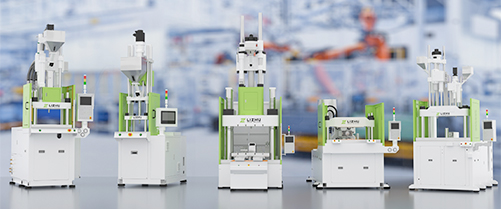
- Mold mounting and table motion: fixed table, single sliding table, double sliding table, or rotary table, chosen for how parts and inserts are loaded.
- Drive and control: hydraulic, servo-hydraulic, or all-electric, matched to the repeatability and energy profile the part demands.
- Automation interface: robot handshakes, ejector sequencing, part-drop detection, and conveyor or bin placement.
Builders with a dedicated custom line handle these changes as a package rather than as one-off modifications. That means non-standard tonnage, multi-color layouts, and vertical-horizontal hybrid designs are engineered together with the clamp and the injection unit, not bolted on afterward.
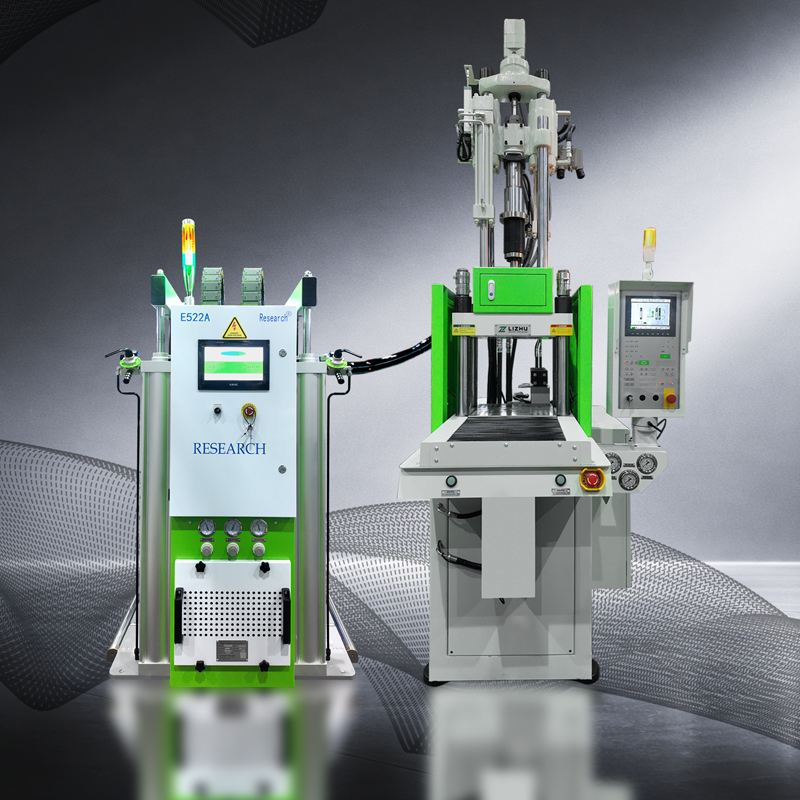
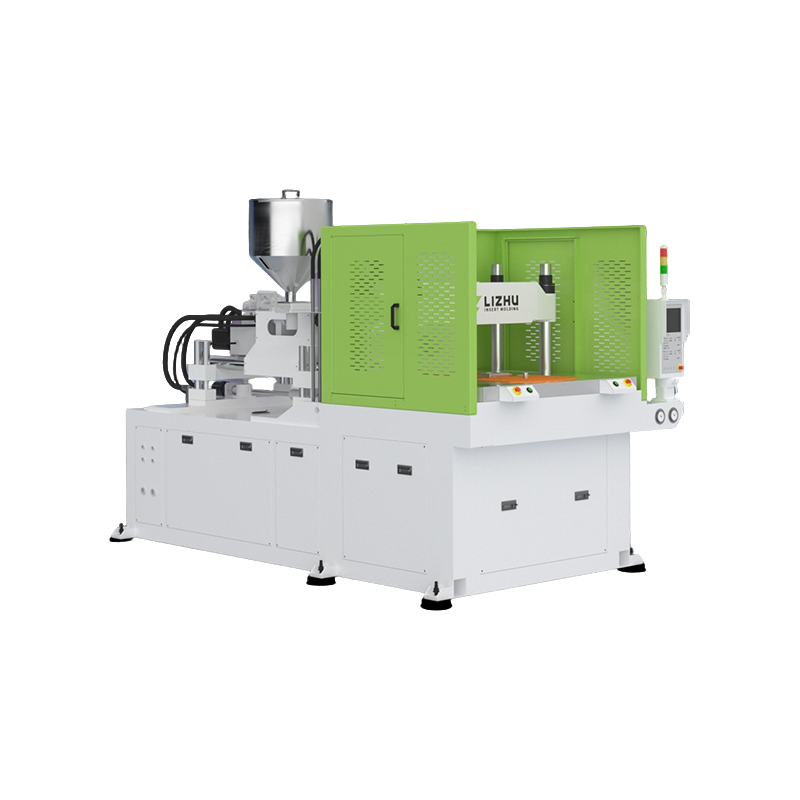
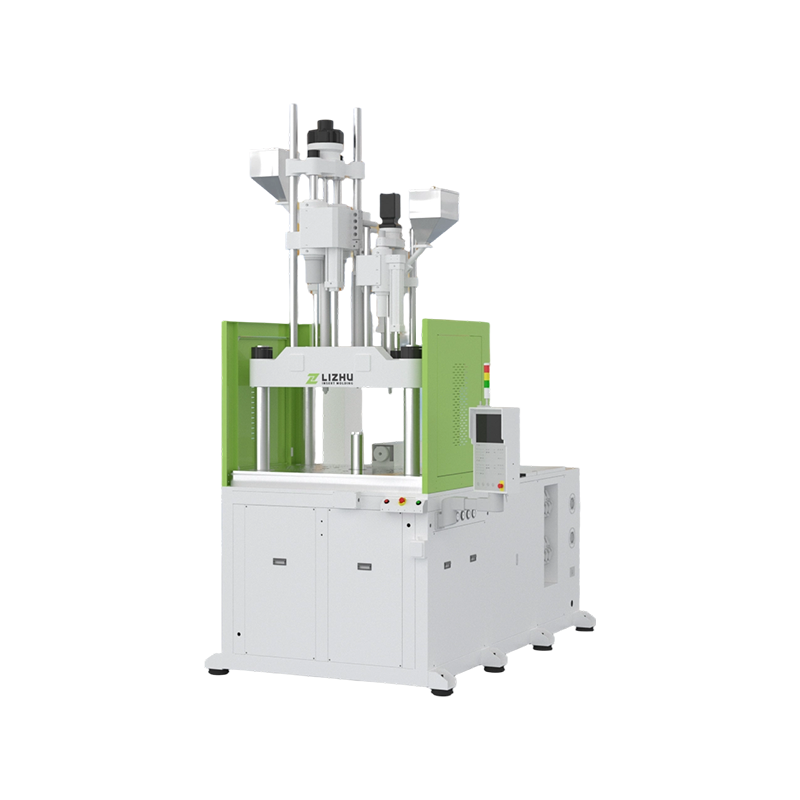 Customized Vertical Injection Molding Machine for Precision Insert MoldingTailored vertical press with customizable clamp and injection units, suited to precision insert work and multi-material parts across electronics, automotive, medical, and semiconductor packaging.View Product →
Vertical or Horizontal? Decide Orientation First
Orientation is the first decision because it settles how inserts are loaded, how finished parts fall, and how much floor space the cell needs. Vertical machines win most insert and precision work; horizontal machines win large, flat, high-tonnage parts.
| Consideration | Vertical machine | Horizontal machine |
|---|---|---|
| Insert loading | Gravity holds the insert in the mold, with open access from above and the front | Inserts usually need a fixture or a robot |
| Floor space | Tall, narrow footprint that fits into existing work cells | Long footprint with a larger aisle requirement |
| Part drop | Parts fall clear onto a chute or conveyor | Parts often land on tie bars or need a take-out robot |
| Multi-station work | Sliding and rotary tables are common and well proven | Shuttle tables are possible but less common |
| Typical trigger | Deep inserts, small precision parts, multi-color molding | Large flat parts, high tonnage, thick sections |
The Specifications That Drive Price and Lead Time
Four or five specifications account for most of the gap between two quotes for the same part: clamping force, injection unit size, table configuration, control package, and automation scope.
| Specification | Why it moves cost | What to confirm |
|---|---|---|
| Clamping force | A larger frame, platen, and tie bars raise material and machining cost | Required tonnage plus a modest safety margin, not a round number |
| Injection unit | Screw, barrel, and drive sizing follow shot weight and resin behavior | Shot weight kept inside the middle of the rated capacity for stable melt quality |
| Table configuration | Sliding and rotary tables add mechanics, guarding, and controls | Cycle-time gain measured against added cost and maintenance |
| Control and drive | Servo and all-electric packages cost more up front | Energy, repeatability, and noise targets for the cell |
| Automation scope | Robots, conveyors, and sensors extend engineering time | Interface definitions agreed in writing before the build starts |
Not every project needs this. When the part fits a standard frame, a standard machine is the faster and cheaper route, and running that comparison before committing to a custom build is worth the effort. The trade-offs are set out in this guide to choosing a cost-effective standard vertical injection molding machine.
Matching the Configuration to the Production Job
Configuration should follow the workflow, not the catalog page. The table type and the number of injection units are the two choices that change daily output the most.
Sliding tables for insert-heavy molding
A single sliding table lets one mold half shuttle out for loading while the other stays working, which raises manual throughput. A double sliding table keeps both halves productive and is usually the pick when operators load several inserts per cycle.
Rotary tables for multi-station cycles
Rotary tables spread loading, injection, and cooling across separate stations, so a long cooling time no longer dictates the entire cycle. They suit medium-volume parts with a stable, repeatable sequence.
Multi-color and vertical-horizontal hybrids
Two or more injection units turn a two-step assembly into a single molding cycle, removing a bonding or welding station and the scrap that comes with it. The same logic applies to vertical-horizontal hybrid layouts, where a horizontal unit handles the main shot and a vertical unit takes the second material.
Multicolor Vertical Injection Molding Machine for Multi-Material Precision MoldingVertical press for single-, double-, or triple-shot molding of different colors or materials in one cycle, reducing assembly steps and scrap.View Product →
Large low-base machines for oversized parts
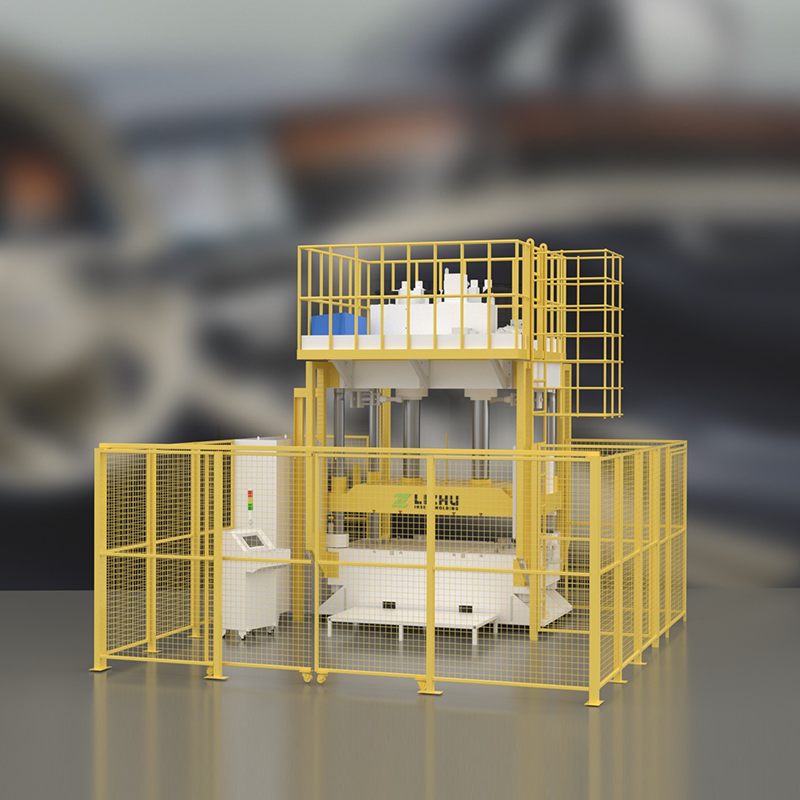
Low-base frames keep tall molds and heavy inserts within comfortable reach, which matters when the part is large enough that operators cannot work at shoulder height all shift. Clamp capacity, platen support, and access clearance should be checked together.
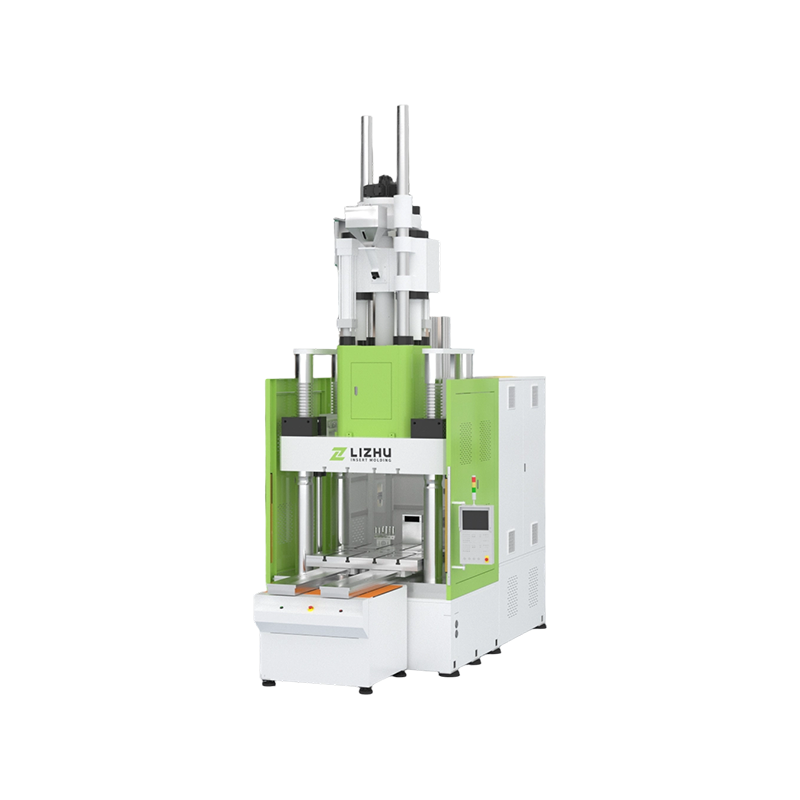 Customized Large Low-Base Vertical Injection Molding Machine for Complex PartsLarge vertical molding machine with low base and high-tonnage clamping for complex plastic parts; mold access, clamp capacity, and automation planning shape the investment.View Product →
Automation and Controls: The Quiet Cost Drivers
Automation is where custom projects quietly gain or lose their business case, because the machine is often the smaller half of the investment.
- Robot or sprue picker integration: mounting, reach, and handshake signals must be defined before the frame is welded.
- Ejector and part-drop confirmation: sensors that stop the cycle instead of letting a short shot reach the bin.
- Mold protection and process monitoring: cavity pressure or tie-bar strain monitoring, useful when parts are expensive or safety related.
- Traceability: shot data logging and export, increasingly requested by medical and automotive customers.
Retrofitting guarding, sensors, and interfaces after delivery almost always costs more than specifying them at the design stage.
Procurement Risks Worth Planning Around
The risks that most often derail a custom machine order are vague acceptance criteria, mold-to-machine mismatches, and underestimated commissioning time.
- Undefined acceptance tests: agree on the resin, the mold, the target cycle time, and the sample quantity before the purchase order is signed.
- Mismatched tooling: nozzle radius, locating ring, ejector pattern, and platen T-slots must be checked against the actual mold drawing, not a description of it.
- Underestimated commissioning: allow time for installation, utility verification, safety validation, and operator training before full production targets apply.
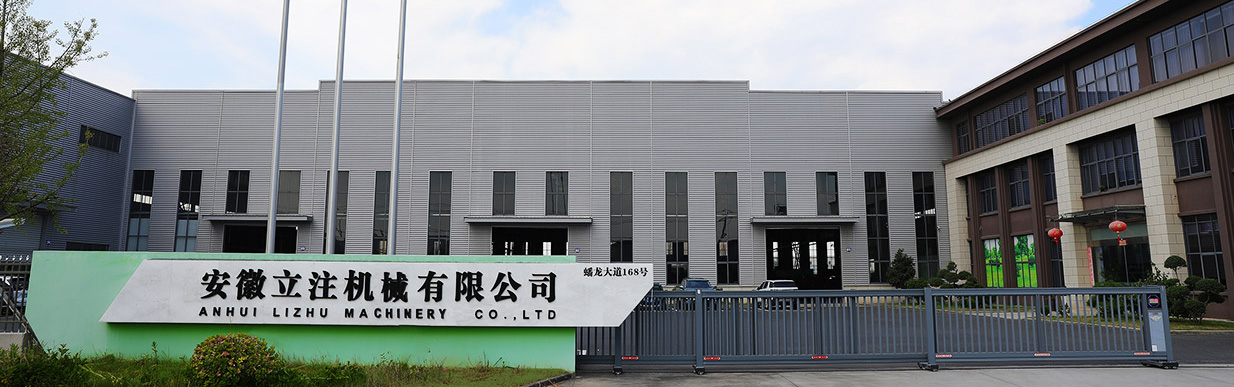
- Unverified build capability: request a factory walkthrough or documented build-stage photographs, especially for non-standard tonnage.
Frequently Asked Questions
How long does a custom injection molding machine take to build?
Longer than a standard model, because engineering, casting, and machining are part-specific. Quotes commonly land several weeks beyond a standard delivery, with the spread driven by tonnage, control package, and component lead times. Ask for a milestone schedule rather than a single delivery date.
How much more does a custom machine cost than a standard one?
There is no fixed percentage. A frame adaptation may add a moderate amount, while new platens, extra injection units, or full automation add substantially more. The honest rule is that cost tracks how far the design moves from the nearest standard model.
Can a standard machine be modified instead of ordering custom?
Often yes, and it is usually the cheaper path when the changes are limited to nozzles, ejector patterns, platen drilling, or control parameters. Once clamping force or table motion has to change, a purpose-built frame is normally more reliable than a heavily modified standard one.
What information do I need before requesting a quote?
Send the part drawing, resin data sheet, mold drawing, target cycle time, annual volume, insert details, and the automation and quality requirements. Missing resin and mold data is the most common reason a quote stalls.
A custom injection molding machine earns its premium when a standard frame genuinely cannot hold the part, the insert, or the cycle. Work backward from the part: fix orientation first, then the clamping and injection specifications, then the table layout that matches how operators actually load and unload, and finally the automation and acceptance criteria. Do that, and a custom build stays predictable in both cost and performance; skip it, and even a well-built machine will struggle to hit its numbers on your floor.